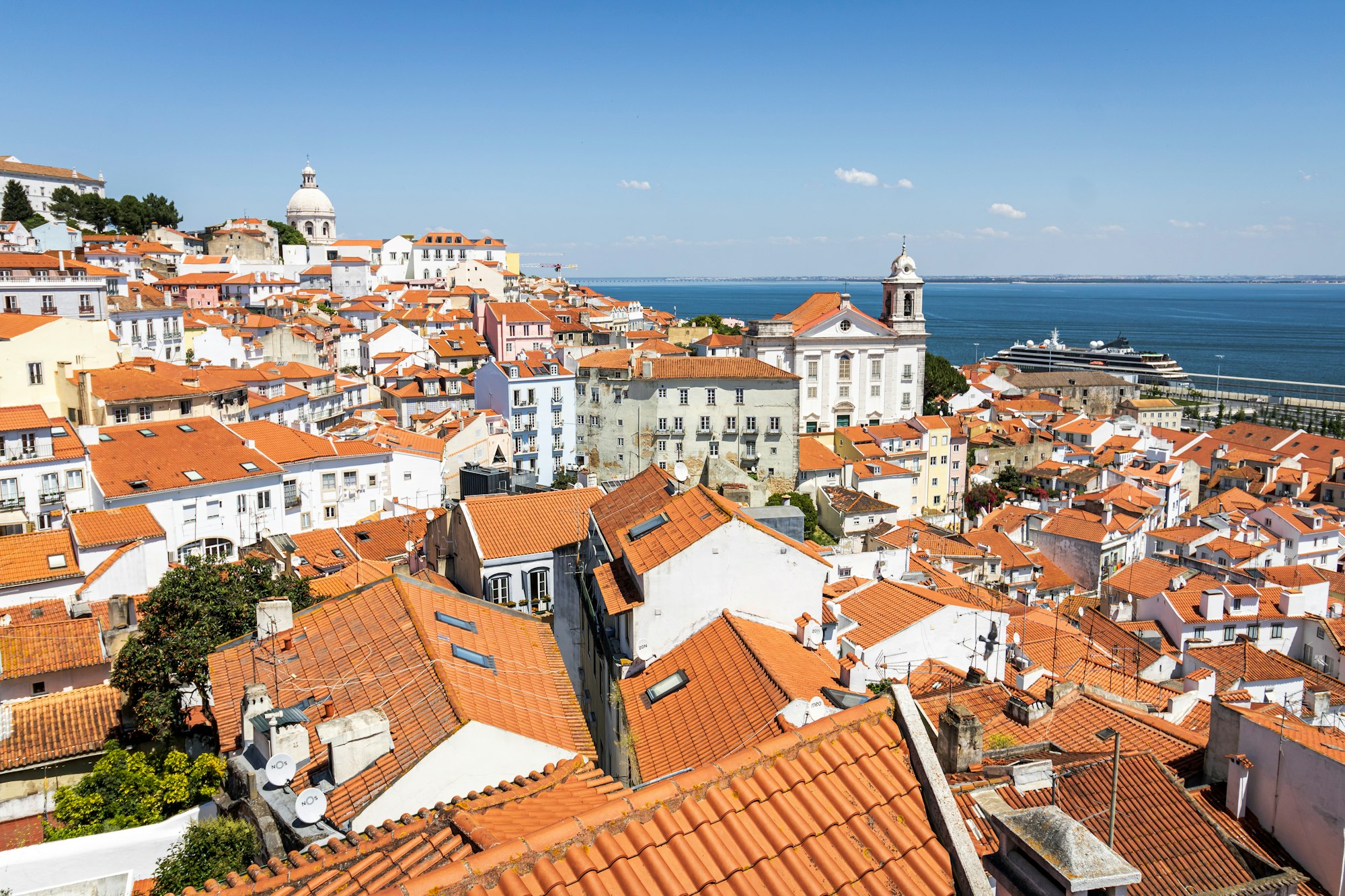
Portugal Travel Guide
Portugal packs a lot into a narrow strip of Atlantic coast. In two weeks you can ride a yellow tram up Lisbon's hills, climb through the misty gardens of Sintra, drink port above Porto's river, watch terraced vineyards slide past a train window in the Douro, kayak beneath the Algarve's golden cliffs and walk a levada through Madeira's laurel forest. It's also one of Western Europe's easier trips: short flights from the UK and most of Europe, fast trains between the main cities and food that's generous without being fussy. Prices have risen, especially in Lisbon, but Portugal still costs less than most of Spain, France or Italy. This guide covers when to go month by month, 7-, 10- and 14-day itineraries, Lisbon by neighbourhood and tram, how to do Sintra without the queues, Porto and the Douro, the Algarve's beaches and the new Benagil cave rules, Madeira and the Azores, what to eat and what things really cost.
Best time to visit Portugal
Spring (March to May)
The best season for city breaks and touring: 18–24°C, green hills and wildflowers on the Algarve clifftops, and prices that haven't hit summer levels yet. The sea is still cold.
Summer (June to August)
Beach season. The Algarve is busy and at its priciest; Lisbon can top 30°C on hot days, while Porto and the west coast stay fresher. Book rooms and Sintra tickets early.
Autumn (September to October)
Our favourite time: the sea is at its warmest, the crowds thin out, evenings are still warm and the Douro grape harvest runs from mid-September.
Winter (November to February)
Cheaper and quieter but wetter on the mainland. Prime time for Madeira's winter sun (around 19–20°C) and for the giant waves at Nazaré.
Portugal weather by month
Approximate average daytime highs in Lisbon and Atlantic sea temperatures on the Algarve coast (°C). This is the ocean, not the Med: the water is a few degrees cooler than Spain's Mediterranean coast, and the west coast around Cascais and Nazaré is colder still. Porto runs a couple of degrees cooler than Lisbon and noticeably wetter in winter. Madeira is mild all year, with highs of about 19–26°C and sea temperatures of 18–24°C.
| Month | Lisbon | Atlantic (Algarve) | Notes |
|---|---|---|---|
| January | 15° | 16° | Cool and showery, quiet and cheap in Lisbon. A great month for Madeira. |
| February | 16° | 15° | Almond blossom in the Algarve and carnival in smaller towns. |
| March | 19° | 15° | Spring arrives. Good sightseeing weather, too cold to swim. |
| April | 20° | 16° | Green and flowering. Easter brings a short spike in prices. |
| May | 23° | 17° | One of the best months: sunny, lush and still good value. |
| June | 26° | 19° | Santo António (Lisbon) and São João (Porto) street festivals with grilled sardines. |
| July | 28° | 20° | Peak beach season. The Algarve is busy and expensive. |
| August | 29° | 21° | Hottest month and European school holidays. Book everything ahead. |
| September | 27° | 21° | Warm sea, fewer people. Grape harvest begins in the Douro. |
| October | 23° | 20° | Golden autumn, first rains, and Nazaré's big-wave season starts. |
| November | 18° | 18° | Wetter and cheap. No queues at the big sights. |
| December | 15° | 17° | Christmas lights, and Funchal's famous New Year's Eve fireworks on Madeira. |
Where to go in Portugal
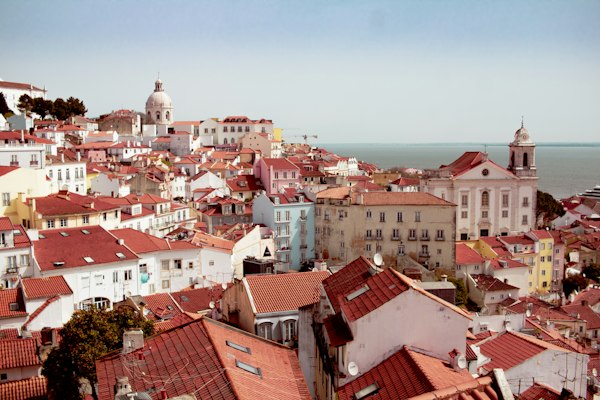
Lisbon3–4 days
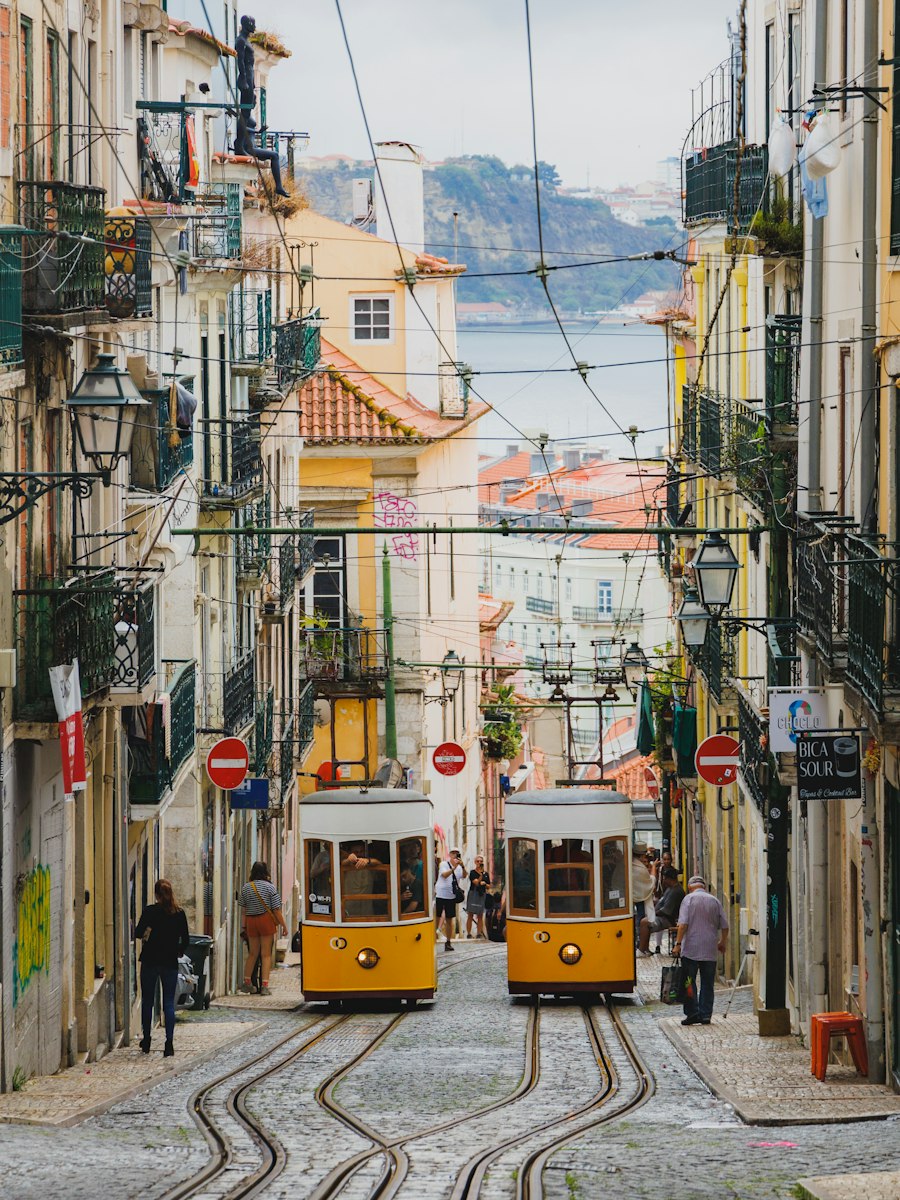
A capital on seven hills above the Tagus: Alfama's tangle of lanes, sweeping miradouros (viewpoints), Belém's monuments and late fado nights. Let the funiculars and vintage trams do the climbing.
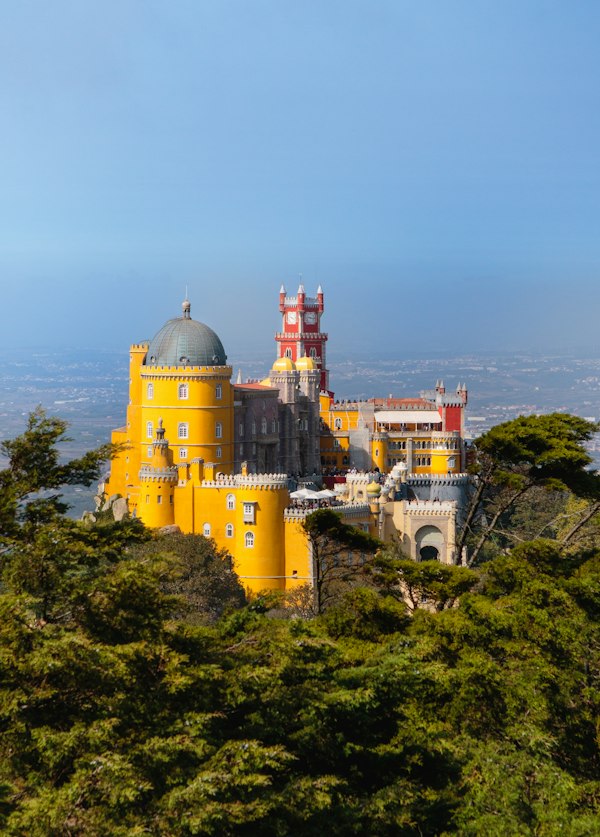
SintraDay trip from Lisbon
A forested hill town of romantic palaces: the red-and-yellow Pena Palace, the Moorish Castle on its ridge and the initiation well at Quinta da Regaleira. About 40 minutes by train from Rossio.
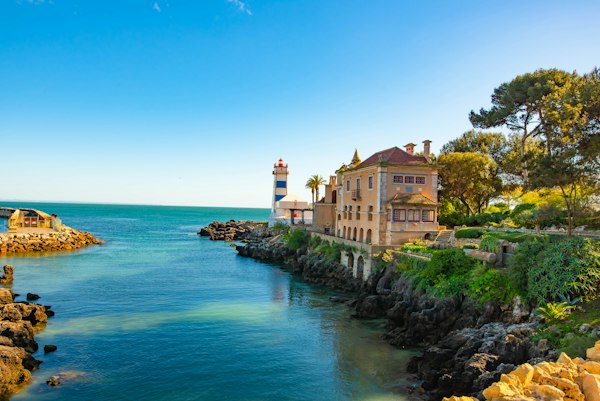
CascaisHalf to full day
A polished seaside town west of Lisbon with the Santa Marta lighthouse, the Boca do Inferno sea arch and the surf beach at Guincho. Trains from Cais do Sodré take about 40 minutes.
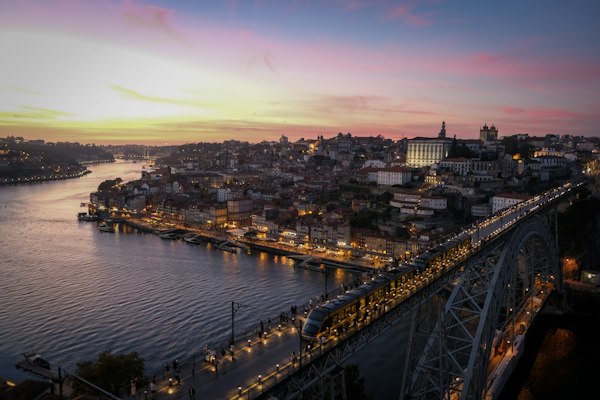
Porto2–3 days
Portugal's second city: tiled churches, the stacked houses of Ribeira, the iron Luís I Bridge and port lodges across the river in Vila Nova de Gaia. Cheaper and more compact than Lisbon.
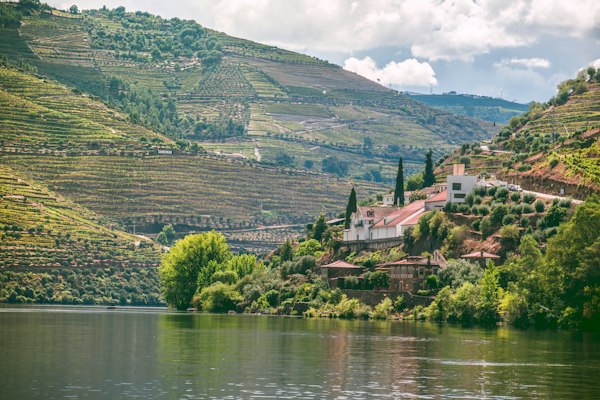
Douro Valley1–2 days
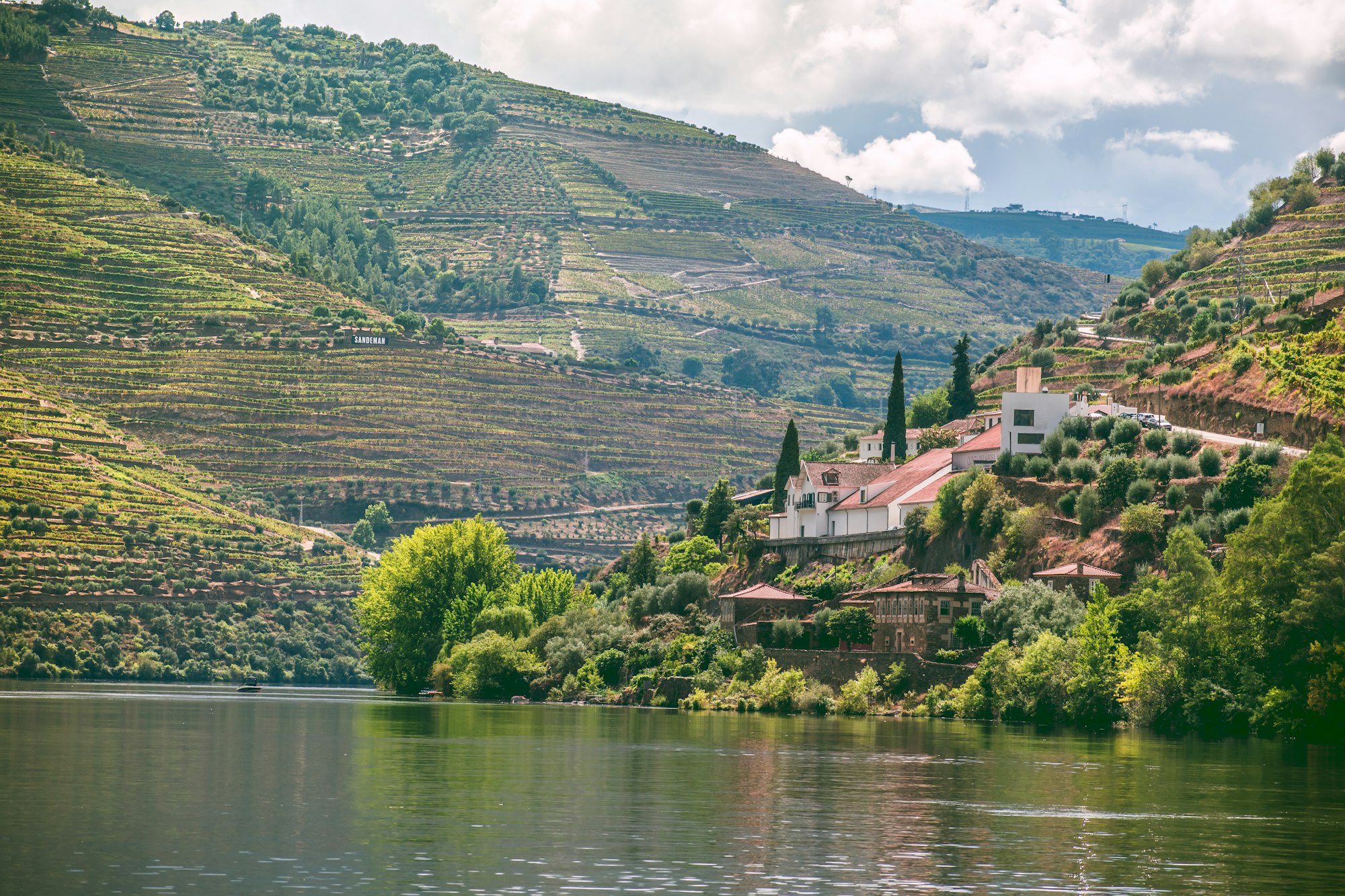
The world's oldest demarcated wine region and a UNESCO landscape of terraced vineyards. The train from Porto to Pinhão follows the river for much of the way.
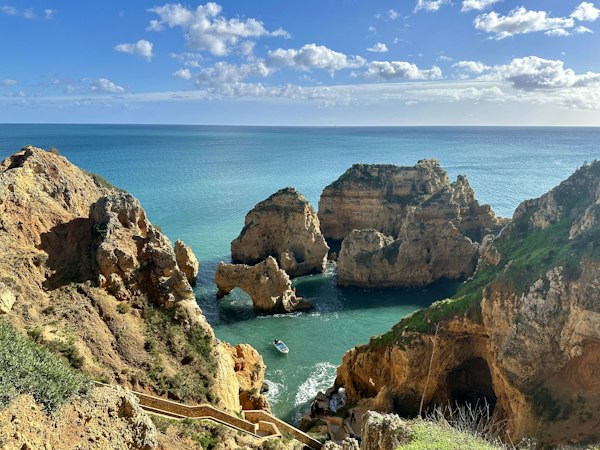
Algarve (Lagos, Benagil, Faro)3–5 days
Golden cliffs, sea caves and coves on the south coast. Lagos is the liveliest base, Benagil the famous cave, and Faro has a walled old town and the Ria Formosa lagoon islands.
Madeira4–7 days
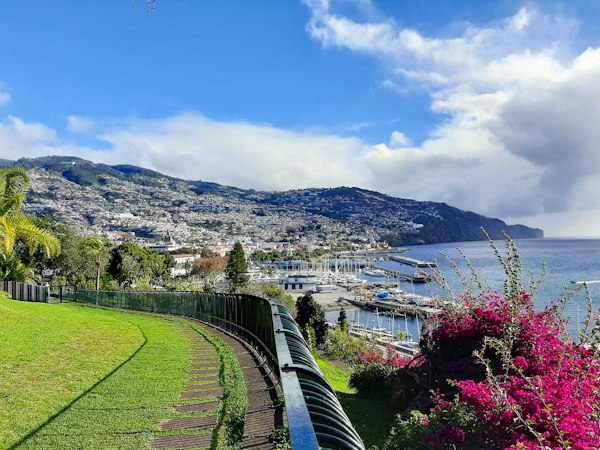
A volcanic island of year-round spring: levada paths through laurel forest, peaks above the clouds and Funchal's gardens and fruit market. About 1h45 from Lisbon, with direct flights from the UK.
The Azores4–7 days
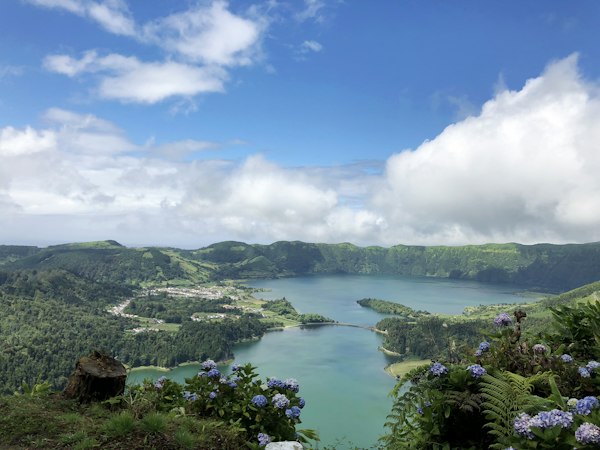
Nine green islands in mid-Atlantic. Start on São Miguel for the crater lakes of Sete Cidades, the hot springs at Furnas and whale watching from spring to autumn.
Portugal itineraries: 7, 10 and 14 days
Distances are short. The fast train takes about 3 hours from Lisbon to Porto and roughly the same to the Algarve, so you can see a lot without a car. Madeira and the Azores need a flight.
7 days: Lisbon, Sintra and Porto
The classic first trip. Fly into Lisbon and home from Porto (or the reverse) so you never double back.
- Days 1–3Lisbon
Alfama and São Jorge Castle, Baixa and Praça do Comércio, a night in Bairro Alto, and a full morning in Belém for Jerónimos Monastery, Belém Tower and the original custard tarts.
- Day 4Sintra and Cascais
An early train to Sintra for a timed Pena Palace slot and Quinta da Regaleira, then sunset at Cabo da Roca or a seafood dinner in Cascais.
- Days 5–6Porto
Fast train north. Ribeira, the Luís I Bridge, the azulejos of São Bento station, Livraria Lello and a port lodge tasting in Gaia.
- Day 7Douro Valley
The riverside train to Pinhão or a small-group tour with a boat ride and two quinta tastings. Fly home from Porto.
10 days: Lisbon, Porto and the Algarve
Cities and beaches. Porto to Faro is about an hour by plane, or go back through Lisbon by train.
- Days 1–3Lisbon
Neighbourhoods, trams, Belém and an evening of fado.
- Day 4Sintra
Pena Palace, the Moorish Castle and Quinta da Regaleira.
- Days 5–6Porto and the Douro
One day in the city, one in the vineyards.
- Days 7–10Algarve
Fly to Faro and base yourself in Lagos or Carvoeiro: Ponta da Piedade, a licensed Benagil boat or kayak tour, the Seven Hanging Valleys trail and a day on the Ria Formosa islands.
14 days: the mainland plus Madeira
Cities, small towns and island hiking. Swap the Madeira days for four more on the Algarve if you'd rather swim than walk.
- Days 1–3Lisbon
Neighbourhoods, Belém and a fado night in Alfama.
- Day 4Sintra
The palaces, then sunset at Cabo da Roca.
- Day 5Óbidos and Nazaré
Drive or bus north via the walled town of Óbidos and the lighthouse cliff at Nazaré.
- Days 6–8Porto and the Douro
Two days in Porto and one in the Douro's vineyards.
- Day 9Fly to Madeira
Porto or Lisbon to Funchal. Evening in the old town and a ride on the Monte cable car.
- Days 10–13Madeira
The 25 Fontes levada, sunrise at Pico do Arieiro, the lava pools of Porto Moniz and the wild north coast.
- Day 14Home
Direct flights from Funchal to many UK airports, or connect via Lisbon.
Where to stay in Portugal
Stay central in Lisbon and Porto so you can walk everywhere, pick one base on the Algarve rather than hopping, and choose Funchal on Madeira for restaurants and easy transport.
Lisbon
Baixa and Chiado for a first visit, Alfama for old-town atmosphere, Príncipe Real for something calmer and more upmarket.
See hotelsExpedia →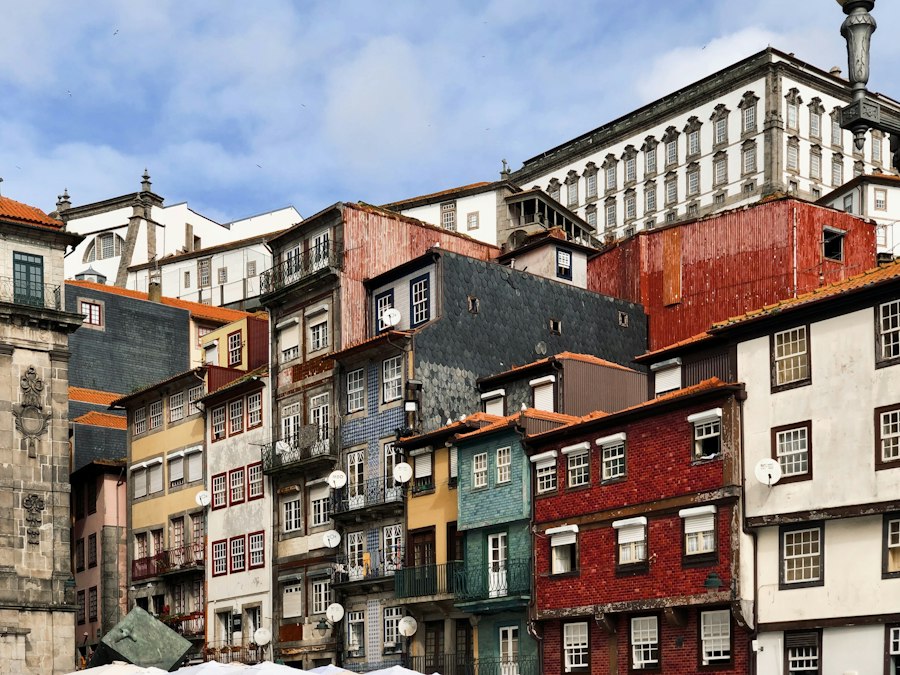
Porto
Ribeira and the streets around São Bento for walking, or Gaia for river views across to the old town.
See hotelsExpedia →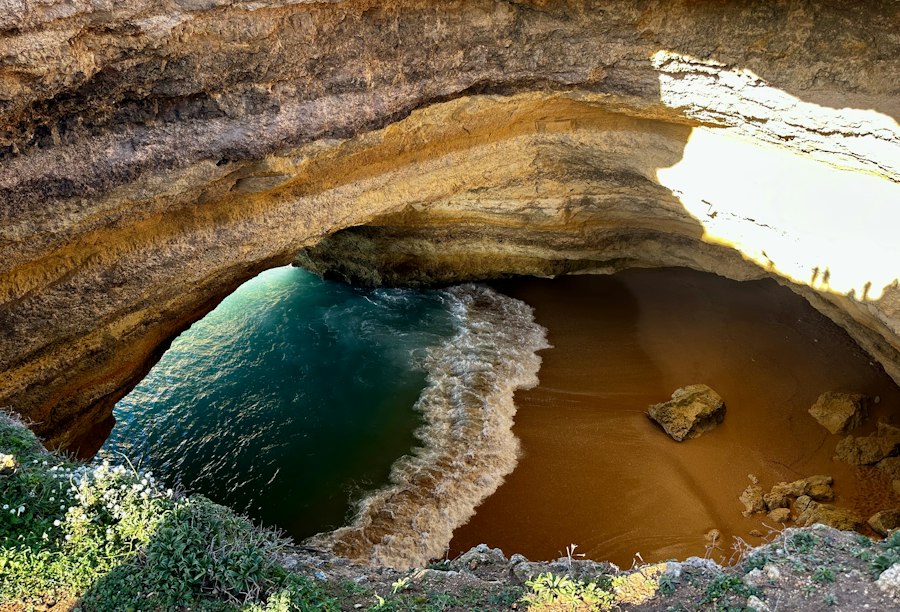
Lagos and the Algarve
Lagos for its old town, restaurants and beaches, or Carvoeiro to be close to Benagil and the Seven Hanging Valleys.
See hotelsExpedia →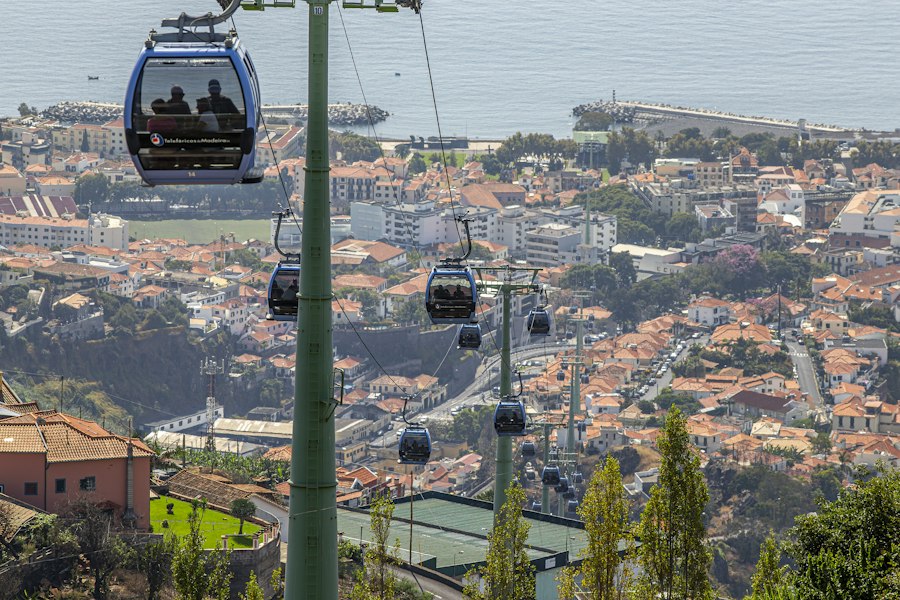
Funchal, Madeira
Ocean-view hotels with pools, close to the old town and the Monte cable car. A good base for winter sun.
See hotelsExpedia →Buying through these links supports these guides.
Lisbon by neighbourhood and by tram
Lisbon is all hills and polished limestone cobbles that turn slippery in the rain, so shoes with grip matter more than anything else you pack. Plan your days by area rather than by sight, and use the trams, funiculars and Santa Justa lift to save your legs.
Buy a reusable Navegante card at any metro station and load it with credit or a 24-hour pass (about €7) covering the metro, buses, trams and funiculars. It also pays for the trains to Sintra and Cascais. Tickets bought on board a tram cost much more and are cash only.
- Alfama and the castle: The oldest quarter, with laundry-strung alleys, tiny churches and the city's best-known fado houses. The Santa Luzia and Portas do Sol viewpoints look straight over the rooftops to the river.
- Baixa and Chiado: The grid-planned downtown rebuilt after the 1755 earthquake, opening onto Praça do Comércio, with Chiado's old cafés and bookshops above. The easiest first-time base.
- Bairro Alto and Príncipe Real: Bairro Alto's lanes fill with people and drinks at night. A few streets up, Príncipe Real has concept stores, garden squares and some of the city's best restaurants.
- Belém: Jerónimos Monastery, Belém Tower and the Monument to the Discoveries along the river. The queue at Pastéis de Belém moves fast; go inside to eat. Tram 15 runs here from Praça da Figueira.
- Tram 28: The famous yellow route from Martim Moniz to Campo de Ourique through Graça, Alfama and Estrela. Board at the first stop early in the morning for a seat, and keep your bag zipped in front of you when it's packed. Trams 12 and 24 give the same rattling ride with shorter queues.
- LX Factory and the riverfront: A former industrial complex beneath the 25 de Abril bridge, now full of bookshops, cafés and street art. Combine it with a walk to the MAAT museum and Belém.
Planning Sintra without the queues
Sintra is Lisbon's most popular day trip, and without a plan you'll spend it in lines. Trains leave Rossio station every 20 minutes or so and take about 40 minutes; tap in with your Navegante card.
You can't drive up to the palaces. Private and rental cars are banned from the Pena road and the historic centre, so take bus 434 from the station (it loops past the Moorish Castle and Pena), a taxi, a ride-hailing car or a tuk-tuk. If you're driving to Cascais afterwards, park at the edge of town.
- Pena Palace timed tickets: The palace interior runs on 30-minute timed slots with no tolerance for latecomers. The palace-and-park ticket is about €20 (park only about €10). Book on the official Parques de Sintra website at least a week ahead from Easter to October.
- A smart order: Pena at the first slot of the day, the Moorish Castle on foot through the park, lunch in town, then Quinta da Regaleira and its initiation well in the afternoon when the morning tour groups have moved on.
- Don't overdo it: Three sites is a full day. With a second day, add Monserrate Palace and its gardens, which are far calmer.
- Something sweet: Try travesseiros (puff pastry with almond cream) and queijadas, Sintra's own pastries, at the historic Piriquita café.
Porto and the Douro Valley
The Alfa Pendular fast train runs from Lisbon (Santa Apolónia or Oriente) to Porto Campanhã in about 2 hours 50 minutes; the Intercidades is a little slower and cheaper. Book on the CP website a few weeks ahead for discounted fares, then take a local train or the metro into the centre.
Porto is a walking city. Start at São Bento station for its blue-and-white tile panels, wander downhill to Ribeira, then cross the top deck of the Luís I Bridge to Gaia. Sunset from the Jardim do Morro is the city's best free show.
- Port lodges: The cellars in Vila Nova de Gaia offer tours with tastings. Smaller family houses tend to be more personal than the big names; book weekend visits ahead.
- Eat like Porto: The francesinha (a layered steak-and-ham sandwich under melted cheese and beer sauce), a roast pork sandwich at a classic tasca, and grilled fish in Matosinhos by the sea.
- The Douro by train: Regional trains from São Bento reach Régua in about 2 hours and Pinhão in about 2.5 hours. Sit on the right-hand side heading east for river views.
- The Douro by tour: If you're not driving, a small-group day tour with a short boat ride and two quinta tastings is the easiest option. The harvest runs from mid-September to early October.
Algarve beaches and Benagil Cave
The Algarve has two personalities. The west, around Lagos and Sagres, is all ochre cliffs, sea stacks and small coves; the east, from Faro to Tavira, has long sandy barrier islands and slightly warmer water. For a first visit, Lagos or Carvoeiro puts you within reach of the best scenery.
Benagil Cave's rules have tightened. Swimming into the cave and landing on its inner beach are banned, and only licensed boat tours and guided kayak or paddleboard tours may enter, for a few minutes at a time. Unguided kayak and SUP rentals aren't allowed into the cave area, and the maritime police patrol in summer. You can also look down through the cave's skylight from the clifftop trail.
- Ponta da Piedade: The sculpted headland just south of Lagos. See it from the clifftop boardwalk at sunset, or by small boat through the arches and grottoes.
- Seven Hanging Valleys trail: About 6 km one way along the cliffs between Praia da Marinha and Vale Centianes, passing above Benagil. Start early: there's no shade.
- Beaches worth the detour: Praia da Marinha, Dona Ana and Camilo near Lagos, and Falésia for a long walk on sand below red cliffs. In summer, arrive early for parking.
- Ria Formosa: Ferries from Faro and Olhão run to Culatra and Deserta islands for quiet beaches and seafood lunches in the lagoon.
Madeira and the Azores: Atlantic islands
Madeira is a hiker's island. Its levadas are centuries-old irrigation channels with narrow paths alongside, threading through UNESCO-listed laurel forest. Since January 2026 the official PR trails need a booking on the SIMplifica platform, with 30-minute arrival slots and a fee of about €4.50 per trail; the classic PR1 ridge walk from Pico do Arieiro to Pico Ruivo costs about €10.50. Unofficial levada walks without the PR signage remain free.
The Azores are wilder and slower. Flights from Lisbon to Ponta Delgada on São Miguel take a little over 2 hours, and there are seasonal direct flights from the UK. The weather changes by the hour, so give yourself a few days and check the cloud cams before driving up to a crater lake.
- Madeira walks: 25 Fontes and Risco (PR6), Caldeirão Verde (PR9) and sunrise at Pico do Arieiro. Guided tours include transport and pay a reduced trail fee, which helps if you're not driving the island's steep roads.
- Swimming on Madeira: Sandy beaches are rare. Use the volcanic rock pools at Porto Moniz and the lido platforms in Funchal, where ladders lead straight into the sea.
- São Miguel: Sete Cidades, Lagoa do Fogo, the warm springs of Furnas and cozido, a stew slow-cooked in volcanic ground.
- Whale watching: The Azores are one of the world's best places for it, from April to October. Spring brings migrating blue and fin whales.
Food, pastéis and what to drink
Portuguese food is simple, seafood-heavy and generous. Small family tascas with a daily lunch menu (prato do dia) give the best value. The bread, olives and cheese brought to your table at the start (the couvert) aren't free; if you don't want them, just send them back with a smile.
- Pastel de nata: The warm custard tart, best with cinnamon and a bica. Go to Pastéis de Belém for the original or Manteigaria in Lisbon and Porto.
- Bacalhau: Salt cod, said to be cooked in hundreds of ways. Start with bacalhau à brás, shredded with potato straws and egg.
- Sardines and seafood: Grilled sardines in summer, octopus à lagareiro, the Algarve's copper-pot cataplana and rich seafood rice.
- Madeira specials: Espetada (beef grilled on bay-leaf skewers), bolo do caco garlic flatbread and the tropical fruit stalls of Funchal's Mercado dos Lavradores.
- Drinks: Port in Porto, Vinho Verde with seafood, Alentejo reds, Madeira wine and ginjinha, a cherry liqueur served by the shot in Lisbon and in chocolate cups in Óbidos.
Travelling smoothly in Portugal
- City tourist taxes: Lisbon charges €4 per person per night and Porto €3 (both capped at 7 nights). Hotels usually collect it on arrival, separately from your booking. Several other towns charge smaller amounts.
- Cards and cash: Cards and contactless work almost everywhere, but carry a little cash for small cafés, markets and tram tickets. Use bank-run Multibanco ATMs, and choose to pay in euros if a terminal offers to convert to pounds.
- Meal times: Lunch runs roughly 1–3pm and dinner from about 8pm. Many kitchens close in between.
- Tipping: Not expected, but rounding up or leaving 5–10% for good table service is appreciated.
- Ocean sense: Atlantic swells and currents are strong, especially on the west coast. Swim at lifeguarded beaches and follow the flags.
- Busy places: As in any big city, keep valuables zipped and in front of you on packed trams and the metro.
Before you go
Entry for UK travellers
British passport holders can visit visa-free for up to 90 days in any 180 across the whole Schengen area, not per country. Your passport must have been issued within the last 10 years on the day you arrive and be valid for at least 3 months after the day you plan to leave. Other passports may need a Schengen visa; check the official source for yours before booking.
EES and ETIAS
The EU's Entry/Exit System has been fully running since April 2026: on your first entry, non-EU travellers register fingerprints and a photo at the border, so allow extra time at passport control. ETIAS, the online travel authorisation, hasn't launched yet and is now expected in 2027. Only apply on the official EU website once it opens.
Flights
Direct flights from London and many regional UK airports reach Lisbon, Porto and Faro in about 2.5–3 hours and Funchal in about 4. From North America there are nonstop flights to Lisbon, and some to Porto and the Azores.
Money, plugs and phones
Portugal uses the euro. Sockets are Type C/F (230 V), so UK and US travellers need an adapter. Check your mobile plan: many UK networks now charge for EU roaming, so an eSIM is often cheaper. Portugal is on the same time as the UK (Madeira too); the Azores are an hour behind.
Getting around Portugal
Trains
CP's trains are the easiest way between the main cities: Lisbon to Porto in about 3 hours, Lisbon to Faro in about 3–3.5 hours. Suburban trains to Sintra and Cascais leave central Lisbon every 20 minutes or so.
Buses
Rede Expressos and FlixBus reach smaller places the railway misses, such as Óbidos, Nazaré, Évora and the western Algarve, and are sometimes cheaper than the train.
Domestic flights
TAP and low-cost airlines fly to Madeira and the Azores. Porto to Faro takes under an hour and saves a long train ride.
Car hire
Not worth it in Lisbon or Porto, but freeing in the Algarve, the Douro, the Alentejo and on Madeira. Some motorways have electronic-only tolls, so rent an electronic toll device (Via Verde) with the car.
How much does Portugal cost?
Budget
€60–90 / day- Hostel dorm or simple guesthouse room
- Prato do dia lunches in local tascas
- Navegante card, trains and buses
Mid-range
€120–180 / day- Central 3–4 star hotel
- Good restaurants and a fado evening
- A tour or two, such as the Douro or Benagil
Comfort
€250+ / day- Boutique hotels or a Douro quinta stay
- Hire car and private tours
- Lisbon and Porto's top restaurants
What to pack for Portugal
Universal travel adapter
Portugal uses two-pin Type C/F sockets, so UK plugs won't fit. One adapter covers the rest of Europe too.
View on AmazonAmazon →High-SPF sunscreen
The Atlantic breeze hides how strong the sun is, especially on a Benagil boat or the Algarve clifftop trails.
View on AmazonAmazon →Water shoes
For Madeira's volcanic rock pools at Porto Moniz and the Algarve's rocky coves.
View on AmazonAmazon →Dry bag
Keeps your phone and towel dry on Benagil boat and kayak tours and in the sea spray.
View on AmazonAmazon →Zipped cross-body bag
Keeps phone, cards and passport within easy reach on busy trams and long walking days.
View on AmazonAmazon →Buying through these links supports these guides.
Book before you go
Benagil boat tours fill up fast in summer, and only licensed tours may enter the cave. Book a morning slot for calmer seas.
Portugal eSIM
Data from the moment you land, without worrying about roaming charges.
Get an eSIMAiralo →Buying through these links supports these guides.
Portugal travel tips
Book the bottlenecks early
Pena Palace, Benagil tours and Madeira's levada slots all have timed or limited capacity.
Lisboa Card or Navegante?
The Lisboa Card covers transport plus Jerónimos, Belém Tower and more, and pays off on a busy one- or two-day sightseeing blitz. For a slower trip, the Navegante card is enough.
Fado
Small fado houses in Alfama and Mouraria usually have a minimum spend on dinner, and silence is expected while the singers perform.
Pack a layer
Even in summer, evenings on the west coast, in Porto and in Madeira's mountains can be cool. Bring a light windproof jacket.
Mind the Mondays
Many Lisbon museums and monuments close on Mondays. Use the day for Sintra (most of its palaces open daily) or the beach.
Lisbon or Porto first?
Flights into one and out of the other usually cost no more than a return and save you a 3-hour train ride.
Portugal travel FAQ
Is Lisbon or Porto better for a city break?
Lisbon has more to see, a bigger food scene and easy day trips to Sintra and Cascais. Porto is smaller, cheaper and more walkable, with port lodges and the Douro on its doorstep. They're about 3 hours apart by train, so with a week you can do both.
When is the best time to visit Portugal?
May, June, September and early October: warm and sunny with fewer crowds than July and August, and September has the warmest sea. For Madeira, winter is just as good.
How many days do you need in Portugal?
A week covers Lisbon, Sintra and Porto. Ten days lets you add the Algarve, and two weeks gives you time for Madeira or the Azores too.
Is Portugal cheaper than Spain?
Generally a little, especially for eating out, wine and public transport. Lisbon and the Algarve in August are no longer cheap, though; Porto, the Alentejo and the shoulder seasons offer the best value.
What are the best beaches in the Algarve?
Praia da Marinha and the coves around Benagil, Dona Ana and Camilo in Lagos, Falésia for a long sandy walk, and the Ria Formosa islands near Faro for quiet. The water is Atlantic, around 20–21°C at its warmest in August and September.
Can you swim into Benagil Cave?
No. Swimming in and landing on the inner beach are banned. You can enter only on a licensed boat tour or a guided kayak or paddleboard tour, for a few minutes, or look down through the skylight from the clifftop trail.
Is Madeira worth visiting in winter?
Yes. Funchal averages around 19–20°C in winter, the levadas are green and Christmas and New Year are big events. Expect some rain on the north side and cold, cloudy mornings on the peaks.
Do I need ETIAS for Portugal?
Not yet. ETIAS hasn't launched and is now expected in 2027. UK travellers currently enter visa-free under the 90/180-day rule and register in the EU's Entry/Exit System on their first trip.

Planning a trip to Portugal?
If you want help mapping the route, accommodation and budget, I'm here.
Work with me