Turkey Travel Guide
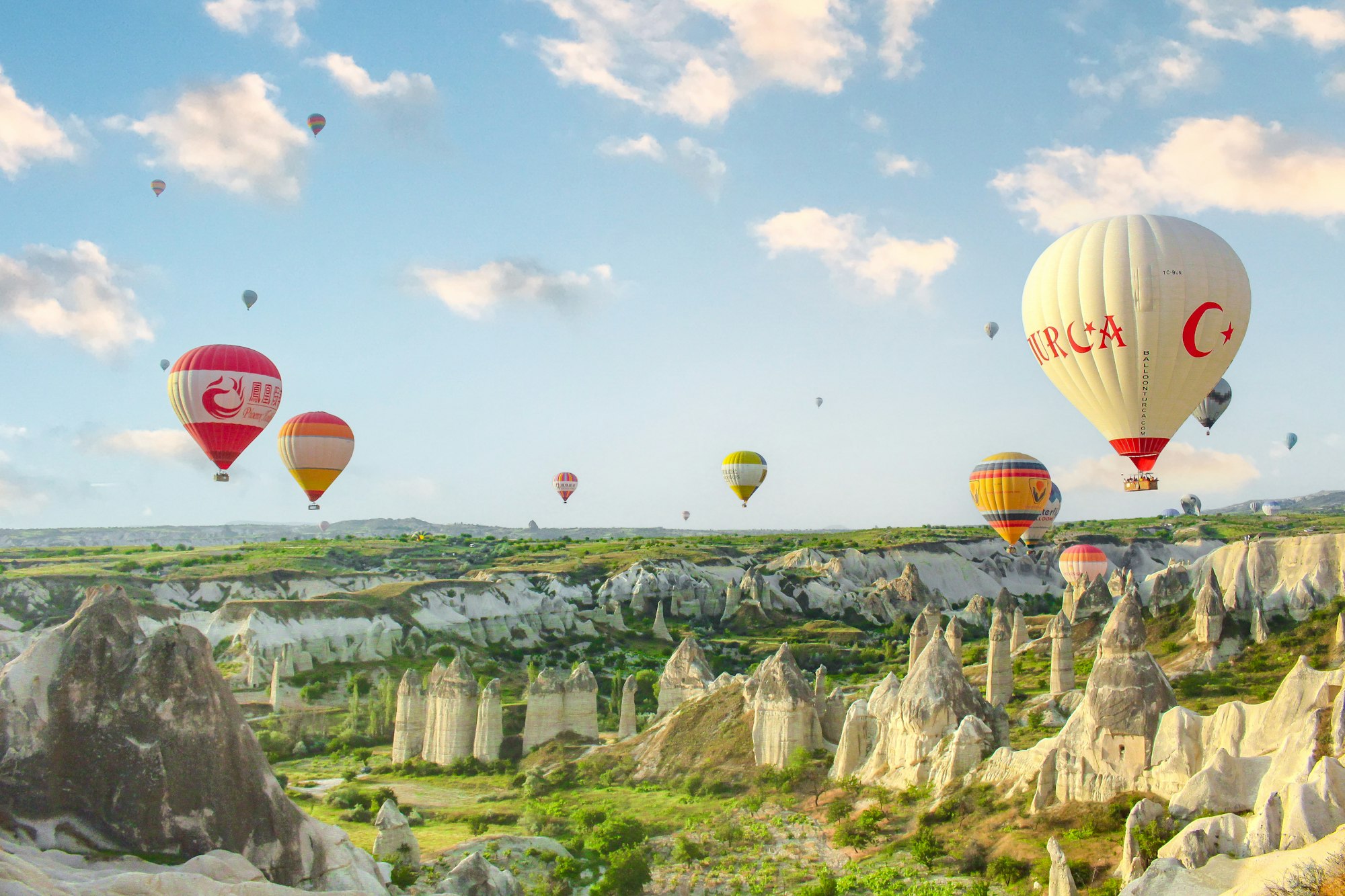
Few countries give you this much range in one trip: Byzantine domes and Ottoman bazaars in Istanbul, sunrise balloons drifting over Cappadocia's fairy chimneys, the white terraces of Pamukkale, the marble streets of Ephesus and a Mediterranean coast of pine-backed coves and turquoise water. Turkey (officially Türkiye) is also easy: short flights from the UK and Europe, a superb domestic flight and bus network, and a food culture that turns every meal into a highlight. This guide covers when to go month by month, 7-, 10- and 14-day itineraries, Istanbul by neighbourhood, how the Cappadocia balloons really work, the Turquoise Coast and Lycian Way, all-inclusive versus travelling independently, money, etiquette and what to eat.
Best time to visit Turkey
Spring (April to early June)
The best all-round season. Istanbul's tulips bloom in April, Cappadocia is green and the sea warms up enough for swimming by late May.
Summer (mid-June to August)
Peak beach season: hot, dry and busy on the coast, very hot at Ephesus and Pamukkale. Istanbul is warm and humid; book everything early.
Autumn (September to October)
Arguably the sweet spot: the sea is at its warmest, the crowds thin out and Cappadocia's balloons fly on most mornings.
Winter (November to March)
Quiet and good value for Istanbul and the sites. Cappadocia can be snowy and magical, but balloon flights are cancelled more often. Too cool for the beach.
Turkey weather by month
Approximate average daytime highs in Antalya and sea temperatures on the Mediterranean coast (°C). Istanbul is 3–8°C cooler than Antalya for most of the year, and Cappadocia, at over 1,000 m, has hot summer days but cold nights and snowy winters.
| Month | Antalya | Mediterranean (Antalya) | Notes |
|---|---|---|---|
| January | 15° | 17° | Mild on the coast, cold and often snowy in Cappadocia. Quiet, cheap Istanbul. |
| February | 16° | 17° | Low season everywhere. Balloons fly less reliably; good hotel deals. |
| March | 18° | 17° | Spring starts in the south. Pleasant for sightseeing, too cool to swim. |
| April | 21° | 18° | Tulip season in Istanbul, wild flowers on the Lycian Way. Great touring month. |
| May | 25° | 21° | One of the best months overall: warm, green and swimmable by the end of the month. |
| June | 30° | 24° | Summer arrives. Beach season in full swing, still comfortable in Istanbul. |
| July | 34° | 27° | Hot and busy, UK and German school holidays. Visit Ephesus and Pamukkale at opening time. |
| August | 34° | 28° | The hottest month and warmest sea. Book coastal hotels and gulets well ahead. |
| September | 31° | 27° | Warm sea, fewer families. Very reliable balloon weather in Cappadocia. |
| October | 26° | 24° | Golden month: still beach weather in the south, lovely for Istanbul and hiking. |
| November | 21° | 21° | Quieter and cooler. Rain becomes more likely; some coastal hotels close. |
| December | 16° | 18° | Low season. Istanbul's museums without queues; Cappadocia may be snowy. |
Where to go in Turkey
Istanbul3–4 days
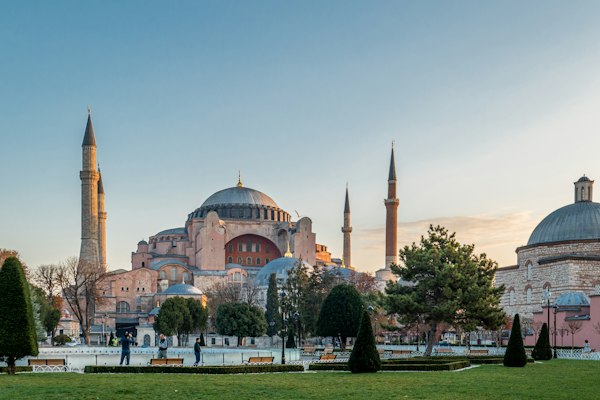
Hagia Sophia, the Blue Mosque, Topkapı Palace and the Grand Bazaar in the old city, then ferries across the Bosphorus between Europe and Asia. Stay at least three nights; the city rewards slow wandering far more than a checklist.
Cappadocia2–3 nights
Fairy chimneys, rock-cut churches, underground cities and cave hotels, with the famous balloon flights at dawn. Base yourself in Göreme or Uçhisar and plan at least two mornings so a windy day doesn't cost you the flight.
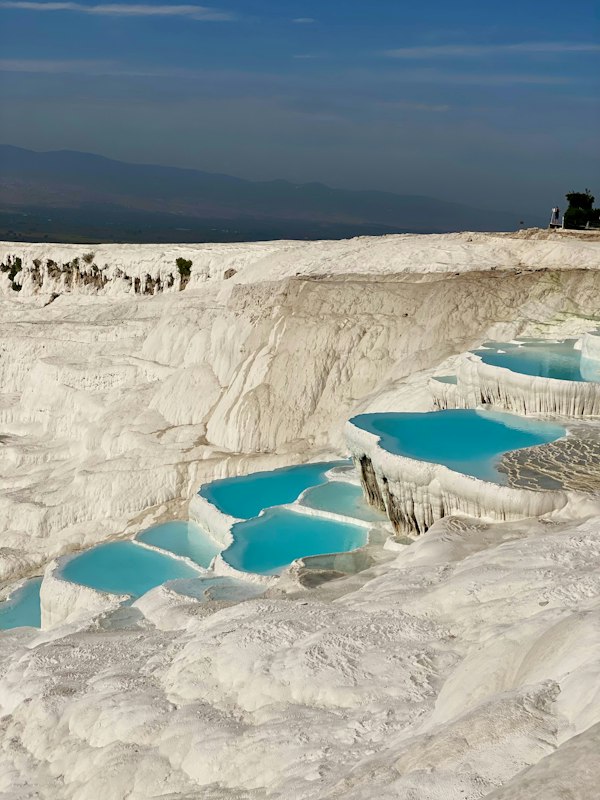
Pamukkale & Hierapolis1 day
Brilliant white travertine terraces filled with warm spring water, with the Roman city of Hierapolis on top. Walk the terraces barefoot, and come early or for sunset to avoid the tour-bus hours.
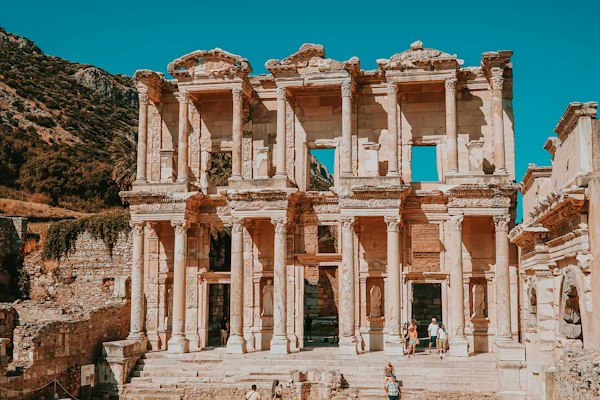
Ephesus & Selçuk1–2 days
One of the finest Roman cities anywhere: the Library of Celsus, the Great Theatre and the Terrace Houses with their mosaics (separate ticket, worth it). Stay in relaxed Selçuk rather than the resort of Kuşadası.
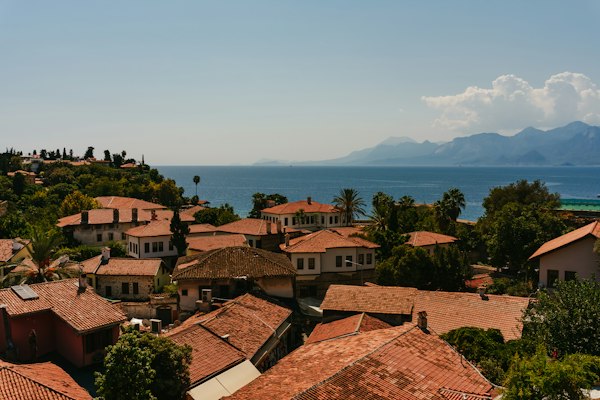
Antalya2–4 days
The gateway to the Turkish Riviera. Kaleiçi, the walled old town, sits above a Roman harbour; nearby are Aspendos' theatre, Perge and the Düden waterfalls. The big all-inclusive resorts line Lara, Belek, Side and Alanya to the east and Kemer to the west.
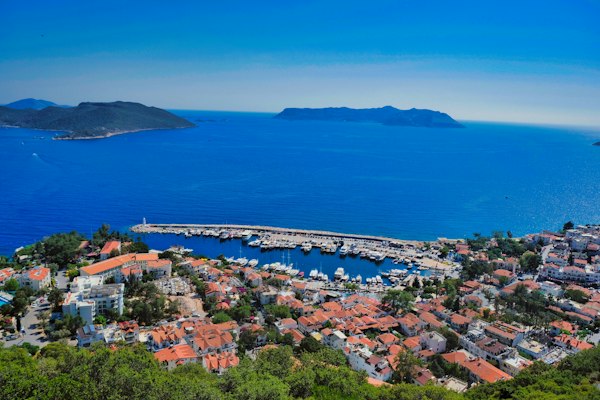
Kaş2–3 days
A small, whitewashed harbour town and the prettiest base on the Lycian coast: swim off rocky platforms, kayak over the sunken city at Kekova, dive, or walk sections of the Lycian Way. The Greek island of Kastellorizo is a short ferry ride away.
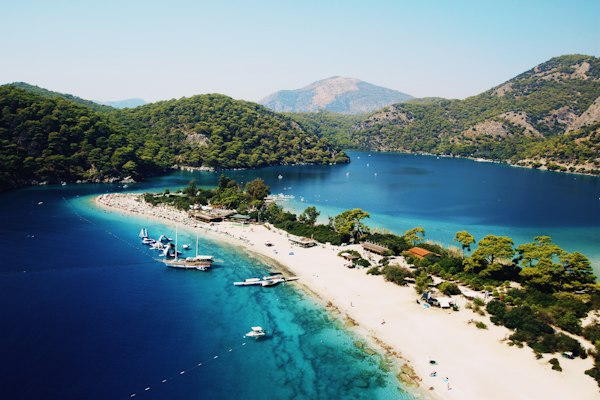
Fethiye & Ölüdeniz2–3 days
The Blue Lagoon at Ölüdeniz is Turkey's most photographed beach, and paragliding down from Babadağ, nearly 2,000 m above it, is the classic thrill. Fethiye is the base for twelve-island boat trips, Saklıkent Gorge and Butterfly Valley.
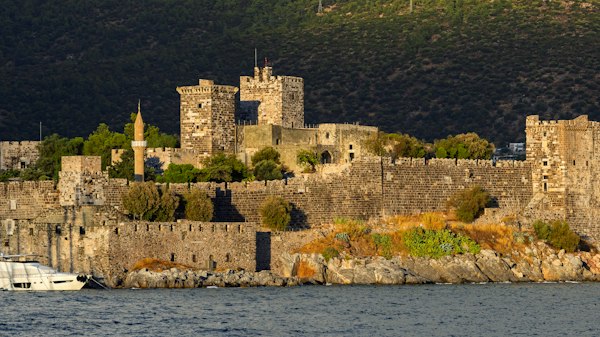
Bodrum2–4 days
The Aegean's stylish peninsula: whitewashed houses, the Castle of St Peter, beach clubs, and quieter bays at Gümüşlük and Yalıkavak. Easily reached from Bodrum airport, with plenty of flights from the UK in summer.
Turkey itineraries: 7, 10 and 14 days
Turkey is big: Istanbul to Antalya is about 700 km. Domestic flights (roughly 1–1.5 hours) save whole days, so mix them with buses and a rental car on the coast.
7 days: Istanbul and Cappadocia
The classic first trip. Fly home from Istanbul, or add a beach week in Antalya.
- Days 1–3Istanbul
Sultanahmet (Hagia Sophia, Blue Mosque, Basilica Cistern, Topkapı), the Grand and Spice Bazaars, a Bosphorus ferry, Galata and Karaköy in the evening.
- Day 4Fly to Cappadocia
About 1h15 to Kayseri or Nevşehir, then a transfer to Göreme. Sunset at Rose Valley or Uçhisar Castle.
- Day 5Balloons and valleys
Balloon flight or viewpoint at dawn, Göreme Open-Air Museum, then hike Love or Pigeon Valley.
- Day 6Underground Cappadocia
Derinkuyu or Kaymaklı underground city, Ihlara Valley, a pottery lunch of testi kebab. Spare morning for a cancelled flight.
- Day 7Back to Istanbul
Fly back and connect home, or spend a last evening in Kadıköy on the Asian side.
10 days: the classic loop
Istanbul, Cappadocia, Pamukkale and Ephesus. Fly out of Izmir.
- Days 1–6Istanbul and Cappadocia
As in the 7-day route, with an overnight bus or flight via Istanbul to Denizli at the end of day 6.
- Day 7Pamukkale
Walk the travertines at opening time, explore Hierapolis and swim in the Antique Pool.
- Day 8To Selçuk
About three hours by train or bus. Afternoon at the Basilica of St John and the Temple of Artemis.
- Day 9Ephesus
Arrive at opening time, include the Terrace Houses, then an evening in the hill village of Şirince.
- Day 10Izmir
Train from Selçuk to Izmir airport (about an hour) for your flight home.
14 days: the big picture
Cities, ruins and the Turquoise Coast. Fly out of Antalya.
- Days 1–9Istanbul to Ephesus
As in the 10-day route.
- Day 10To Fethiye
Pick up a rental car in Selçuk or take the bus (4–5 hours) down to the coast.
- Day 11Ölüdeniz and the boat
Blue Lagoon swim, paragliding, or a day on a twelve-islands boat trip.
- Days 12–13Kaş
Coast road via Patara beach. Kekova kayak or boat trip, a Lycian Way walk, sunset at the ancient theatre.
- Day 14Antalya
About 3.5 hours to Antalya airport; if time allows, an evening in Kaleiçi first.
Where to stay in Turkey
Base yourself centrally in Istanbul, sleep in a cave hotel in Cappadocia, and choose between a resort around Antalya and a boutique hotel in a small harbour town on the coast.
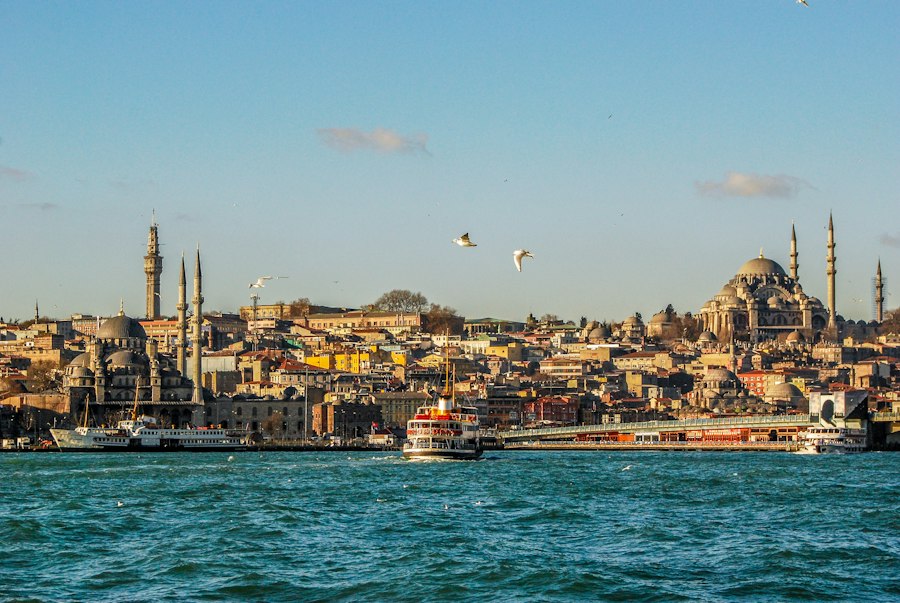
Istanbul
Sultanahmet puts you next to the big sights; Galata and Karaköy have better restaurants, rooftop bars and easy tram access to the old city.
See hotelsExpedia →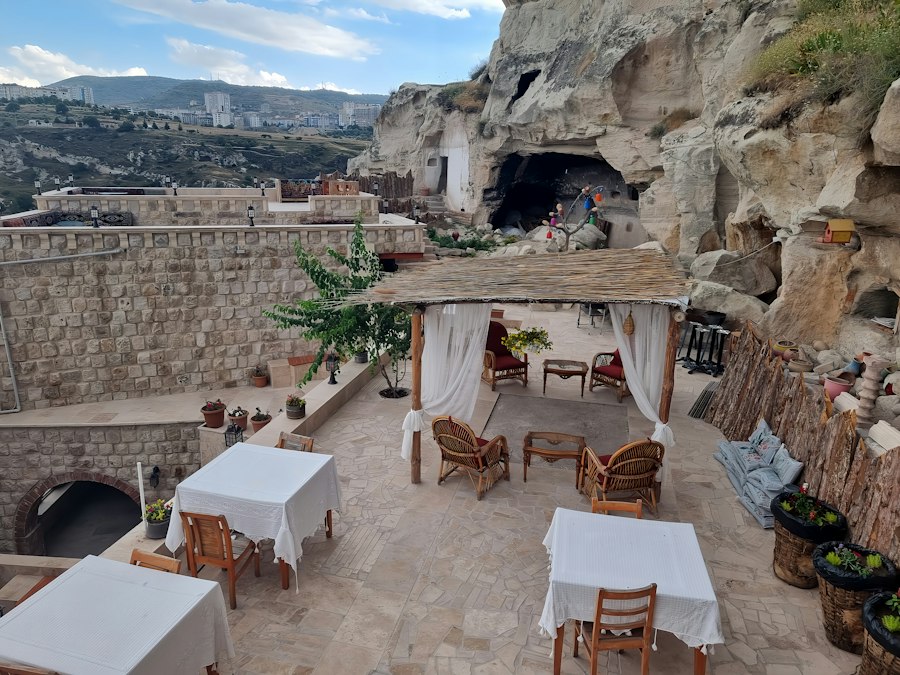
Göreme, Cappadocia
Stay in a cave hotel carved into the rock, ideally one with a terrace for watching the balloons at sunrise.
See hotelsExpedia →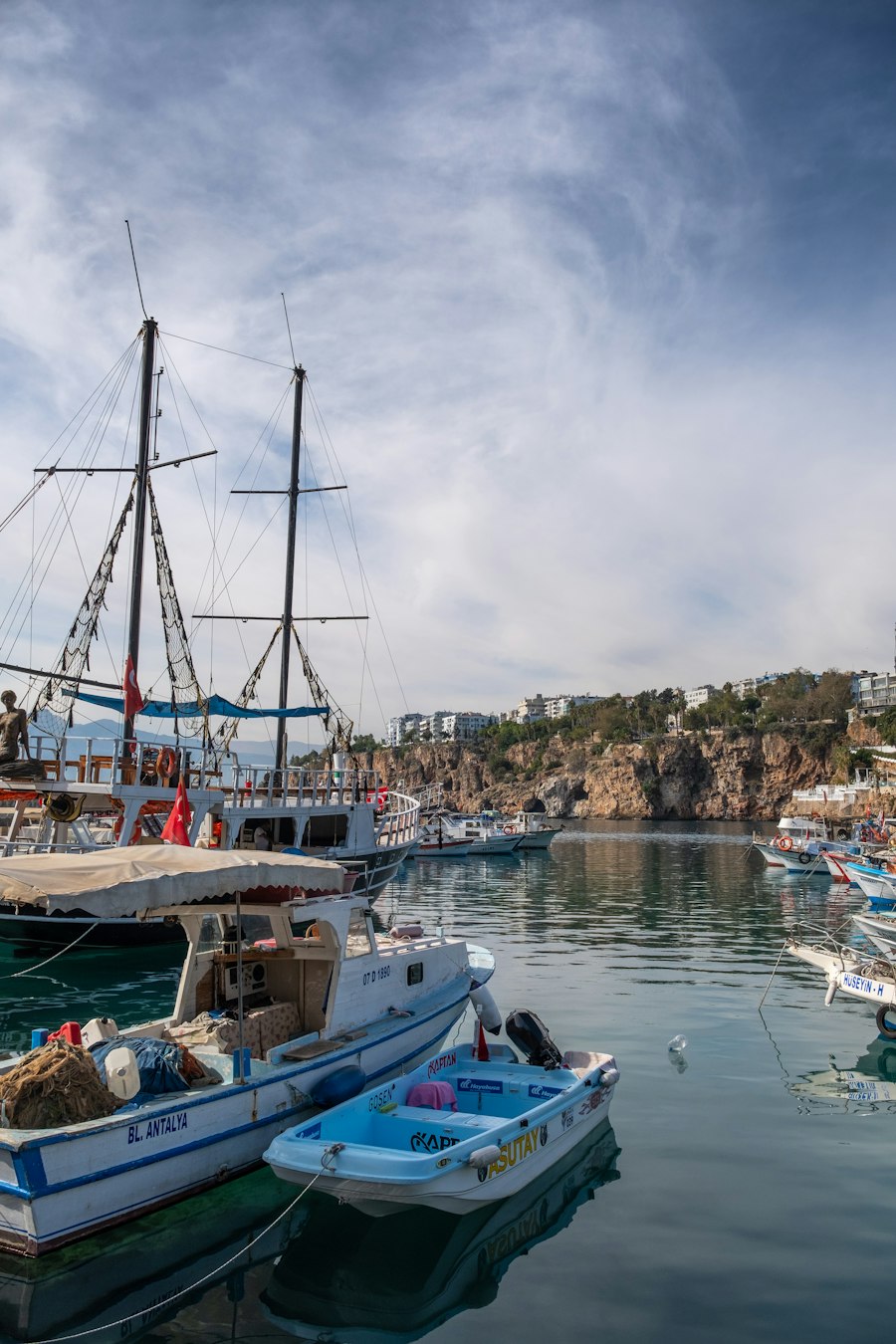
Antalya and the Riviera
Boutique hotels in the Kaleiçi old town, or all-inclusive resorts in Lara, Belek, Side and Alanya.
See hotelsExpedia →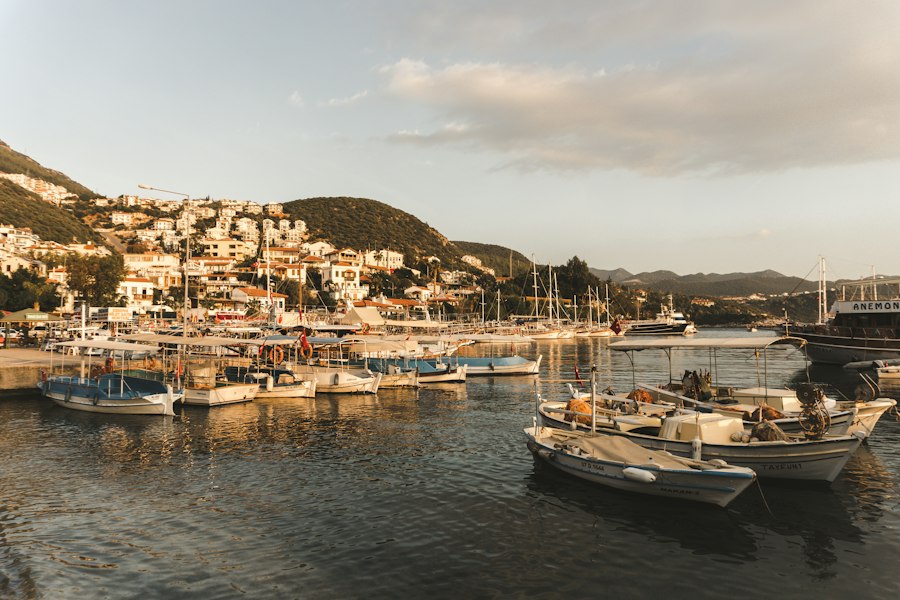
Kaş
Small hotels and guesthouses with sea views and swim platforms, perfect for boat trips and the Lycian coast.
See hotelsExpedia →Buying through these links supports these guides.
Istanbul by neighbourhood: where to spend your time
Istanbul is two cities in one, split by the Bosphorus: the European side holds the historic peninsula and the lively districts around Galata, while the Asian side feels more local. Ferries are part of the fun, cheap and far quicker than road traffic.
Pay for the metro, trams, funicular and ferries with an Istanbulkart, sold at machines in stations and airports. You tap it for each ride, one card can pay for several people, and transfers within a short window are discounted.
- Sultanahmet: The old city: Hagia Sophia (foreign visitors use the upper gallery; around €25 in 2026), the Blue Mosque (free), Topkapı Palace and the Basilica Cistern. Go at opening time; stay here for convenience rather than nightlife.
- Grand Bazaar and Süleymaniye: Wander the covered bazaar, then walk down through the market streets to the Spice Bazaar. The Süleymaniye Mosque, above the Golden Horn, is calmer and just as beautiful as the Blue Mosque.
- Galata, Karaköy and Beyoğlu: Galata Tower, İstiklal Avenue, rooftop bars and the best range of restaurants and boutique hotels. Our pick as a first-time base: well connected by tram and funicular.
- Balat and Fener: Colourful houses climbing the hill along the Golden Horn, antique shops and the Chora (Kariye) mosaics nearby.
- Kadıköy and Moda (Asian side): Take the 20-minute ferry for the food market, meyhanes (meze taverns) and a seaside stroll in Moda.
- Bosphorus: The public ferry from Eminönü up the Bosphorus is the best-value cruise in the city; or hop off at Ortaköy and Bebek for waterfront cafés.
Cappadocia's balloons: what to know before you book
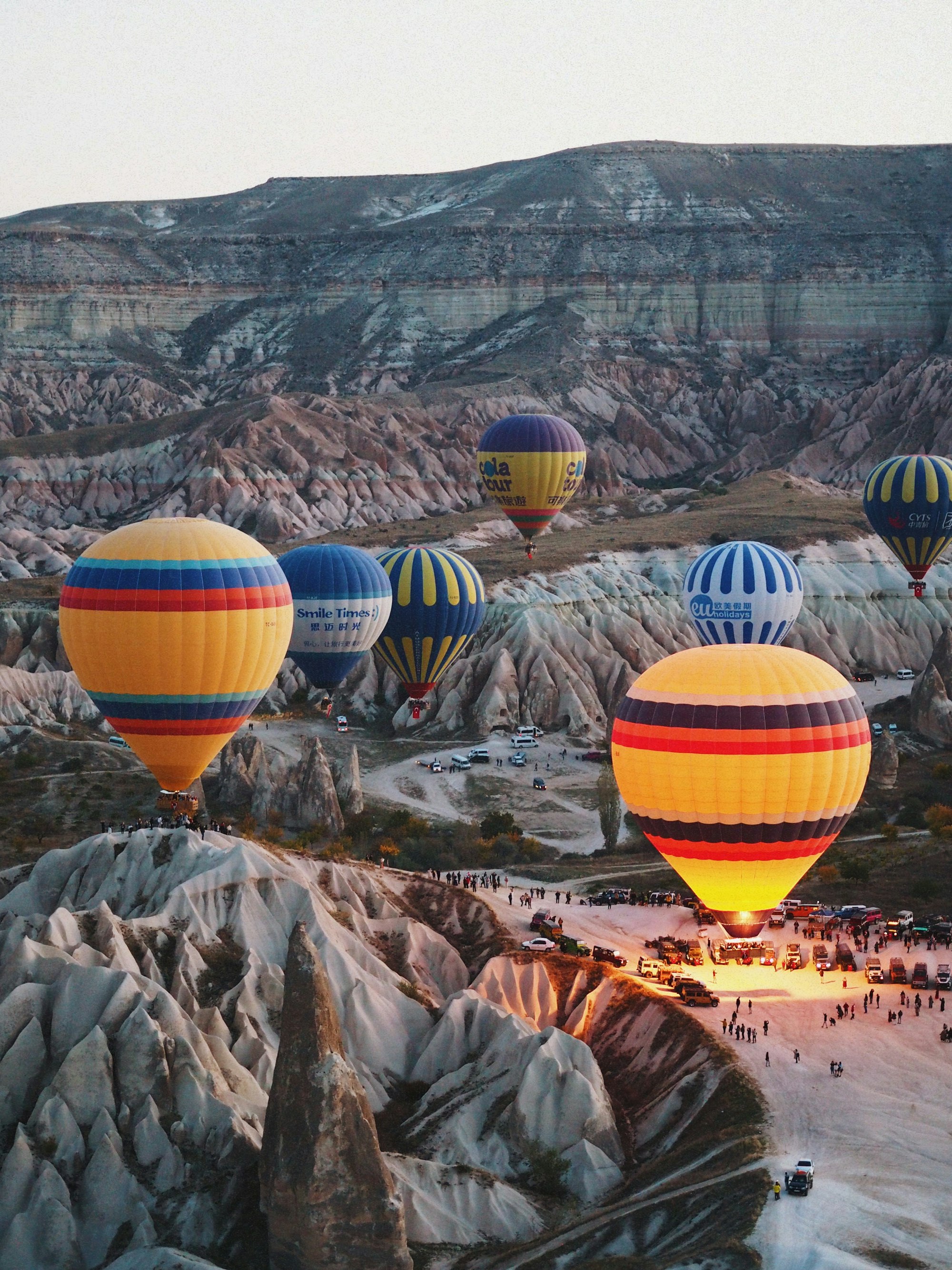
Balloons launch around sunrise over Göreme's valleys and fly for about an hour. Pick-up is before dawn (around 4–5 am in summer) and most flights end with a small celebration on landing. If you'd rather not fly, the sight of a hundred balloons rising from a viewpoint or your hotel terrace is spectacular in its own right.
Flights only go ahead when the civil aviation authority allows it, and wind decides everything. From May to October most mornings fly; from December to March cancellations are much more common. Book for your first morning in Cappadocia, so a cancelled flight can move to the next day.
- Price: Expect roughly €150–250 per person in winter and shoulder season and €250–450 in peak months for a standard shared basket. Smaller baskets and private flights cost more.
- Standard or deluxe: Standard baskets carry around 16–20 people; deluxe flights have fewer passengers and usually a longer flight. Check the flight time, hotel transfers and cancellation terms.
- Viewpoints for non-flyers: Sunrise Point above Göreme, Love Valley and the terrace of your cave hotel are all free front-row seats.
- Other highlights: Göreme Open-Air Museum's frescoed churches, the underground cities of Derinkuyu and Kaymaklı, Uçhisar Castle, and sunset hikes in Rose and Red Valley.
The Turquoise Coast, the Lycian Way and a blue cruise
Between Fethiye and Antalya, the Taurus Mountains drop straight into the sea. This is the Turquoise Coast: pine forests, ancient Lycian rock tombs, clear coves and small harbour towns such as Kaş and Kalkan. Dalaman airport serves the western end (Fethiye, Ölüdeniz, Göcek), Antalya the eastern end.
The Lycian Way, around 540 km of waymarked trail, follows the coast from Fethiye towards Antalya. You don't need to walk it all: day sections from Faralya (above Butterfly Valley), Kaş or Olympos give you the views without the backpack. Spring and autumn are ideal; summer is too hot for long hikes.
- Blue cruise (Mavi Yolculuk): Several days on a traditional wooden gulet, anchoring in bays only reachable by boat. The classic routes run from Fethiye towards Olympos or around Göcek, Marmaris and Bodrum. Shared cabin cruises suit solo travellers; chartering a whole gulet works well for groups.
- Day boats: Twelve-islands trips from Fethiye, Kekova's sunken city from Kaş or Üçağız, and quieter bays around Kalkan. Choose smaller boats if you prefer calm to music.
- Beaches: Ölüdeniz and Patara (18 km of sand and dunes) are the famous ones; Kaputaş, between Kaş and Kalkan, is a postcard cove. Many Kaş and Kalkan hotels have swim platforms on the rocks instead of sand.
- Adventure: Paragliding from Babadağ, sea kayaking at Kekova, canyoning at Saklıkent and diving from Kaş, one of the best dive centres in the Mediterranean.
All-inclusive resort or travelling independently?
Turkey's Riviera is one of Europe's great all-inclusive destinations. Around Antalya (Lara, Belek, Side, Alanya, Kemer), Bodrum and Marmaris, resorts offer big pools, private beaches, kids' clubs and food and drink included, often at prices that are hard to match in Spain or Greece. It's a brilliant choice for a stress-free family week.
The trade-off is that you see little of the country. Our suggestion: combine the two. Spend a few days in Istanbul or Cappadocia first, then finish with a resort week. Or stay in a smaller hotel in Kaş, Kalkan or Fethiye and eat out in town.
- Choose all-inclusive if: You travel with children, want guaranteed sunshine and a pool, and are happy to do one or two organised excursions (Aspendos, Pamukkale, a boat day).
- Go independent if: You want Istanbul, Cappadocia and the ruins, prefer local restaurants, or want to hop between coastal towns.
- Where the resorts are: Belek is known for golf, Lara for grand hotels near the city, Side for its ancient ruins right by the beach, Alanya for livelier, cheaper stays, and Kemer for mountains behind the sea.
Travelling smoothly in Turkey
Turkey is hospitable and easy to travel in, and the tourist areas are well set up for visitors. A few habits help, the same ones you'd use in any busy city.
- Taxis: Use the meter or agree the fare before you set off. In Istanbul, the BiTaksi and Uber apps call regular yellow taxis with the route and price shown in the app.
- Bargaining: Expected in the Grand Bazaar and market stalls, not in shops with price tags. Decide what an item is worth to you, stay friendly and feel free to walk away.
- Friendly invitations: A chat that turns into an invitation to a carpet shop is part of the bazaar experience. A polite 'no, thank you' (hayır, teşekkürler) is always fine.
- Tours and guides: Book balloon flights, boat trips and guides through your hotel or a well-reviewed platform, and check what's included.
- Busy places: In crowded trams, bazaars and the Istiklal crowds, keep your phone and wallet zipped and in front of you, as you would in London or Paris.
- Water: Tap water is treated but most people drink bottled or filtered water; it's cheap everywhere.
Etiquette, mosques and Ramadan
Turkey is a secular republic with a mostly Muslim population, and styles vary widely: relaxed on the coast and in central Istanbul, more conservative in smaller towns. Beachwear is for the beach; cover up a little when walking through town.
Ramadan in 2027 runs from about 8 February to 9 March (depending on the moon). Restaurants in tourist areas stay open during the day, but some local places close until the evening meal (iftar), when the atmosphere is special. The Eid holidays after Ramadan and in mid-May 2027 (Kurban Bayramı) bring very busy domestic travel: book transport early.
- Visiting mosques: Take off your shoes, cover shoulders and knees, and women cover their hair (scarves are often lent at the entrance). Mosques close to visitors during the five daily prayers, longest around Friday midday prayers.
- Greetings: Merhaba (hello), teşekkürler (thank you) and lütfen (please) go a long way. Accept a glass of tea when offered; it's hospitality, not a sales pitch.
- Tipping: Around 5–10% in restaurants if service isn't included; round up for taxis; a small tip for hammam attendants and guides.
- Alcohol: Widely available in tourist areas, but shops don't sell it between 10 pm and 6 am.
What to eat in Turkey
Turkish food goes far beyond the döner. Start with a proper Turkish breakfast (kahvaltı): cheeses, olives, tomatoes, eggs with sucuk, honey with clotted cream (kaymak) and endless tea. Lunch is often at a lokanta, where you point at the day's stews and vegetables in the counter.
- Street food: Simit (sesame bread rings), balık ekmek (grilled fish sandwiches) by the Galata Bridge, midye dolma (stuffed mussels) and kumpir (loaded baked potatoes) in Ortaköy.
- Kebabs and more: Adana and İskender kebab, pide and lahmacun from a wood oven, mantı (small dumplings with yoghurt) and, in Cappadocia, testi kebab cooked in a sealed clay pot.
- Meze and fish: An evening at a meyhane with meze, grilled fish and rakı, the aniseed spirit, is an Istanbul institution.
- Sweets and drinks: Baklava (the best comes from Gaziantep), künefe with hot cheese, Turkish delight, Turkish coffee, ayran (salty yoghurt drink) and fresh pomegranate juice.
Before you go
Entry and visa
UK, US, Canadian and most EU citizens can currently visit visa-free for up to 90 days in any 180; the old e-visa is no longer needed for these passports. British passports must be valid for at least 150 days from arrival. Rules differ by nationality, so check the official source for your passport before booking.
Flights
Direct flights from London and regional UK airports reach Antalya, Dalaman, Bodrum and Istanbul in about 4 hours. Turkish Airlines flies nonstop to Istanbul from many North American cities.
Money
Inflation is high, so prices in Turkish lira (TRY) change quickly; that's why this guide quotes euros. Cards are accepted almost everywhere; carry some cash for markets and small cafés, and choose to be charged in lira at card terminals and ATMs.
Plugs, SIM and time
Sockets are European Type C/F (230 V): travellers from the UK and North America need an adapter. Turkey is on UTC+3 all year. Use an eSIM or buy a local SIM (Turkcell, Vodafone, Türk Telekom) at the airport; roaming from home is usually expensive.
Getting around Turkey
Domestic flights
The fastest way to cover distance: Turkish Airlines, AJet, Pegasus and SunExpress link Istanbul with Cappadocia (Kayseri, Nevşehir), Izmir, Antalya, Dalaman and Bodrum in about 1–1.5 hours. Book early for the best fares.
Long-distance buses
Comfortable coaches with seat-back screens and on-board service connect almost every town, including overnight routes such as Cappadocia–Pamukkale. Compare and book on the obilet app or at the otogar (bus station).
Trains
High-speed trains link Istanbul, Ankara and Konya; a local train runs from Izmir airport to Selçuk for Ephesus. The rail network doesn't reach the south coast.
Car hire and dolmuş
A rental car is the best way to explore the Turquoise Coast and Cappadocia's valleys; skip it in Istanbul. Dolmuş minibuses run cheap, frequent local routes along the coast.
How much does a trip to Turkey cost?
Budget
€45–70 / day- Hostels and simple guesthouses
- Lokantas, street food, pide
- Buses, dolmuş and the Istanbulkart
Mid-range
€100–170 / day- Boutique hotel or cave hotel
- Restaurants and a hammam
- Domestic flights, museum tickets, boat trip
Comfort
€250+ / day- Luxury cave hotels and Bosphorus-view rooms
- Balloon flight, private guides, gulet charter
- Fine dining in Istanbul and Bodrum
What to pack for Turkey
Universal travel adapter
Turkey uses European two-pin sockets; UK and US plugs won't fit.
View on AmazonAmazon →Light scarf
Covers hair and shoulders for mosque visits, and keeps the sun off on boat days and at Ephesus.
View on AmazonAmazon →High-SPF sunscreen
The summer sun on the Turquoise Coast and the white terraces of Pamukkale is intense.
View on AmazonAmazon →Water shoes
Many coves around Kaş and Kalkan have pebbles or rock platforms instead of sand.
View on AmazonAmazon →Dry bag
Keeps your phone and towel dry on boat trips, gulet days and Kekova kayak tours.
View on AmazonAmazon →Zipped cross-body bag
Keeps phone, cards and passport close at hand in the bazaars and on long travel days.
View on AmazonAmazon →Buying through these links supports these guides.
Book before you go
Cappadocia balloon flights sell out in spring and autumn, so book yours for your first morning there.
Turkey eSIM
Be online as soon as you land, without roaming charges or queuing for a SIM at the airport.
Get an eSIMAiralo →Buying through these links supports these guides.
Quick tips
Two nights minimum in Cappadocia
It gives you a second chance at the balloons if the first morning is windy.
Start early at the big sites
Ephesus, Pamukkale and Hagia Sophia are calmer and cooler at opening time.
Museum passes
The Museum Pass Istanbul and the nationwide MuseumPass Türkiye (15 days) save money and queues if you visit several state museums. Hagia Sophia and the Basilica Cistern aren't included.
Friday prayers
Plan mosque visits for mornings; they close around midday prayers, especially on Fridays.
Airports
Istanbul has two: IST on the European side and SAW (Sabiha Gökçen) on the Asian side. Check which one your flight uses.
Try a hammam
A traditional scrub and foam massage in a historic Istanbul bathhouse is worth the splurge.
Turkey travel FAQ
Do I need a visa for Turkey?
UK, US, Canadian and most EU citizens currently don't: stays of up to 90 days in 180 are visa-free. British passports need at least 150 days' validity from arrival. Other nationalities should check the official rules before booking.
How many days do you need in Turkey?
7 days covers Istanbul and Cappadocia. With 10 days add Pamukkale and Ephesus; with 14 you can add the Turquoise Coast around Fethiye and Kaş.
What is the best time to visit Turkey?
April to early June and September to October: warm, less crowded and ideal for both sightseeing and the beach. July and August are best for pure beach holidays but very hot inland.
Is Turkey safe for tourists?
Yes, the main tourist regions (Istanbul, Cappadocia, the Aegean and Mediterranean coasts) are popular and welcoming. Use normal big-city sense in crowds and check your government's travel advice before you go.
Is Turkey expensive?
Prices have risen with inflation, especially in Istanbul and for entry tickets, but Turkey is still good value compared with much of Western Europe. Plan on roughly €100–170 a day for a comfortable mid-range trip.
How much is a hot air balloon ride in Cappadocia?
Roughly €150–250 in low and shoulder season and €250–450 in peak months for a standard shared basket. Prices depend on season, basket size and flight length.
Can I pay in euros or pounds in Turkey?
Some tourist businesses accept euros, but you'll usually get a better deal paying in lira by card or with cash from an ATM.
Istanbul or Antalya?
Istanbul for history, food and city life; Antalya for beaches, resorts and the Riviera. With a week or more, a short domestic flight lets you do both.

Planning a trip to Turkey?
If you'd like help planning your route, from Istanbul and Cappadocia to the Turquoise Coast, I'm here.
Work with me