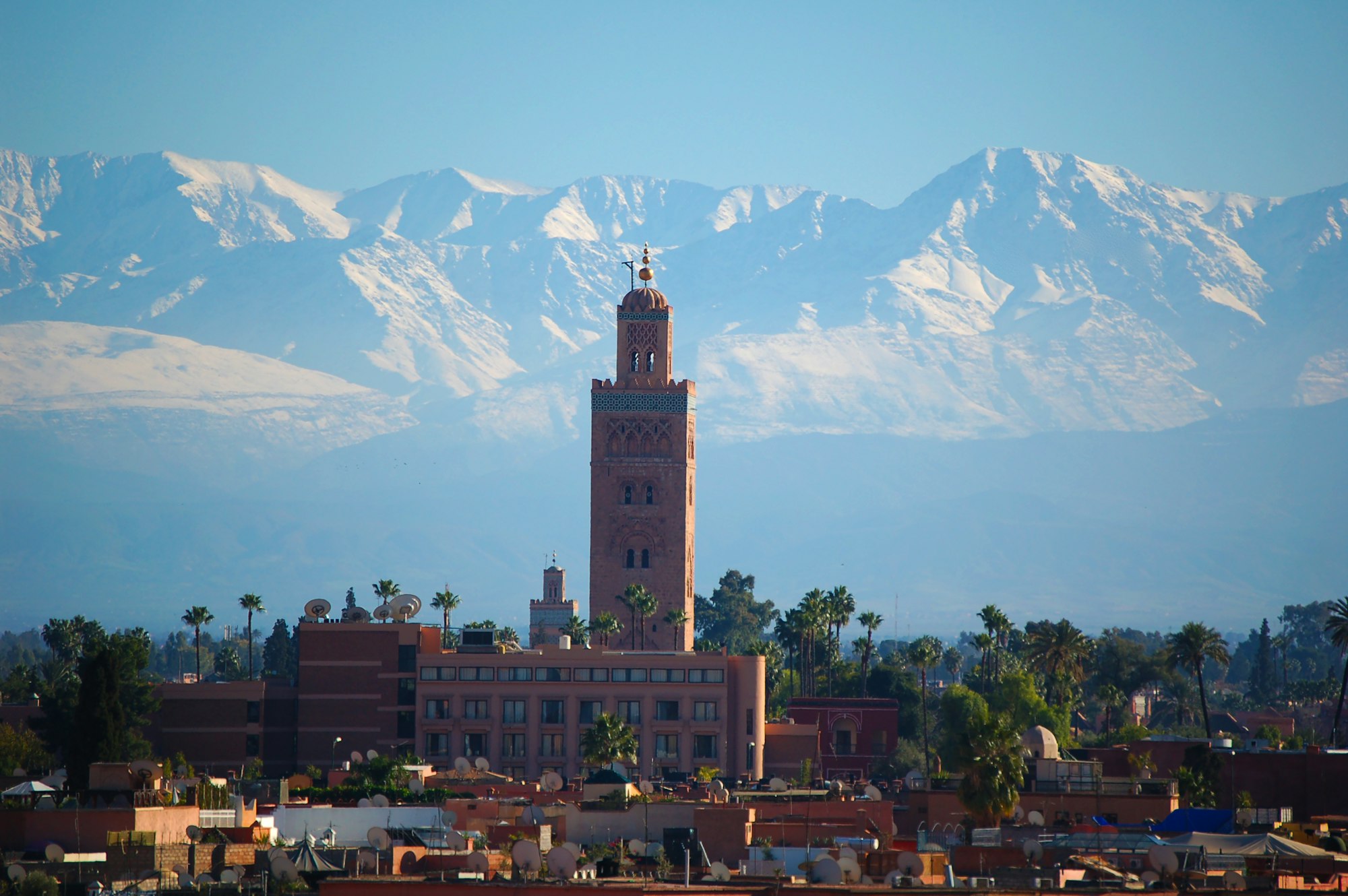
Morocco Travel Guide
Morocco packs more into one trip than almost anywhere a short flight from Europe: the chaos and colour of Marrakech's medina, the medieval maze of Fes, the blue lanes of Chefchaouen, a night under the stars in the Sahara, Berber villages in the High Atlas and the windswept Atlantic port of Essaouira. It's also a country where a little preparation goes a long way. This guide covers when to go, three tested itineraries, how to do the Sahara from Marrakech, where to stay, trains and taxis, money and bargaining, how to get around the medinas with ease, and the etiquette that makes the trip smoother.
Best time to visit Morocco
Spring (March to May)
The best season overall. Warm days, green valleys and comfortable desert temperatures. Book riads early around Easter.
Autumn (September to November)
Almost as good as spring: the heat breaks from late September and the desert and Fes are at their best.
Winter (December to February)
Sunny, mild days in Marrakech but cold nights, freezing desert nights and snow in the Atlas. Pack layers.
Summer (June to August)
Very hot inland, often 40°C in Marrakech and hotter in the desert. Best spent on the coast or in the mountains.
Morocco weather by month
Approximate average daytime highs in Marrakech and sea temperatures at Essaouira (°C). The desert is hotter by day and much colder at night; the High Atlas is colder year-round.
| Month | Marrakech | Atlantic (Essaouira) | Notes |
|---|---|---|---|
| January | 18° | 17° | Mild sunny days, cold nights. Snow on the High Atlas; freezing nights in the desert. |
| February | 20° | 17° | Pleasant in the cities, almond blossom in the valleys. Desert nights still near freezing. |
| March | 23° | 17° | Spring starts: one of the best months for Marrakech, the desert and the Atlas. |
| April | 25° | 18° | Green valleys and warm days: ideal everywhere. Busy around European Easter holidays. |
| May | 29° | 19° | Warm to hot. Good for the coast and mountains; the desert starts heating up. |
| June | 33° | 20° | Hot inland. Head to Essaouira or the Atlas; the desert is very hot by day. |
| July | 37° | 21° | Marrakech regularly hits 40°C. Best for the coast and mountains only. |
| August | 37° | 22° | The hottest month inland and peak summer holidays. Coast is breezy and busy. |
| September | 32° | 22° | Heat eases in the second half. Good month for the coast; desert still warm. |
| October | 28° | 21° | One of the best months for the whole country: warm days, fewer crowds. |
| November | 22° | 19° | Pleasant days, cooler nights. Great for the desert and Fes. |
| December | 19° | 18° | Mild days, cold nights and riads without heating. Quiet except around Christmas and New Year. |
Where to go in Morocco
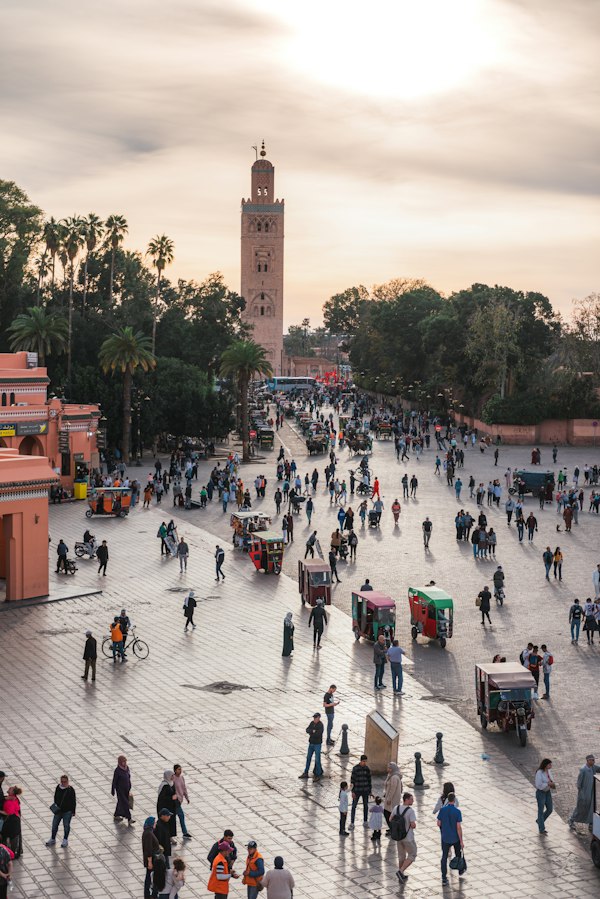
Marrakech2–3 days
Jemaa el-Fna square, the souks, the Bahia Palace, the Ben Youssef Madrasa and the Majorelle Garden. Overwhelming at first; go early in the morning, then retreat to a riad rooftop when the heat and crowds peak.
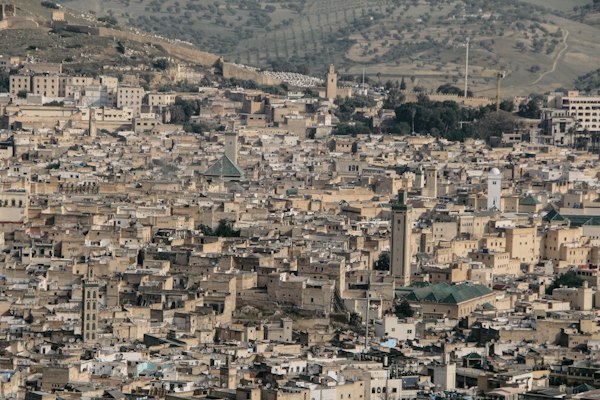
Fes2 days
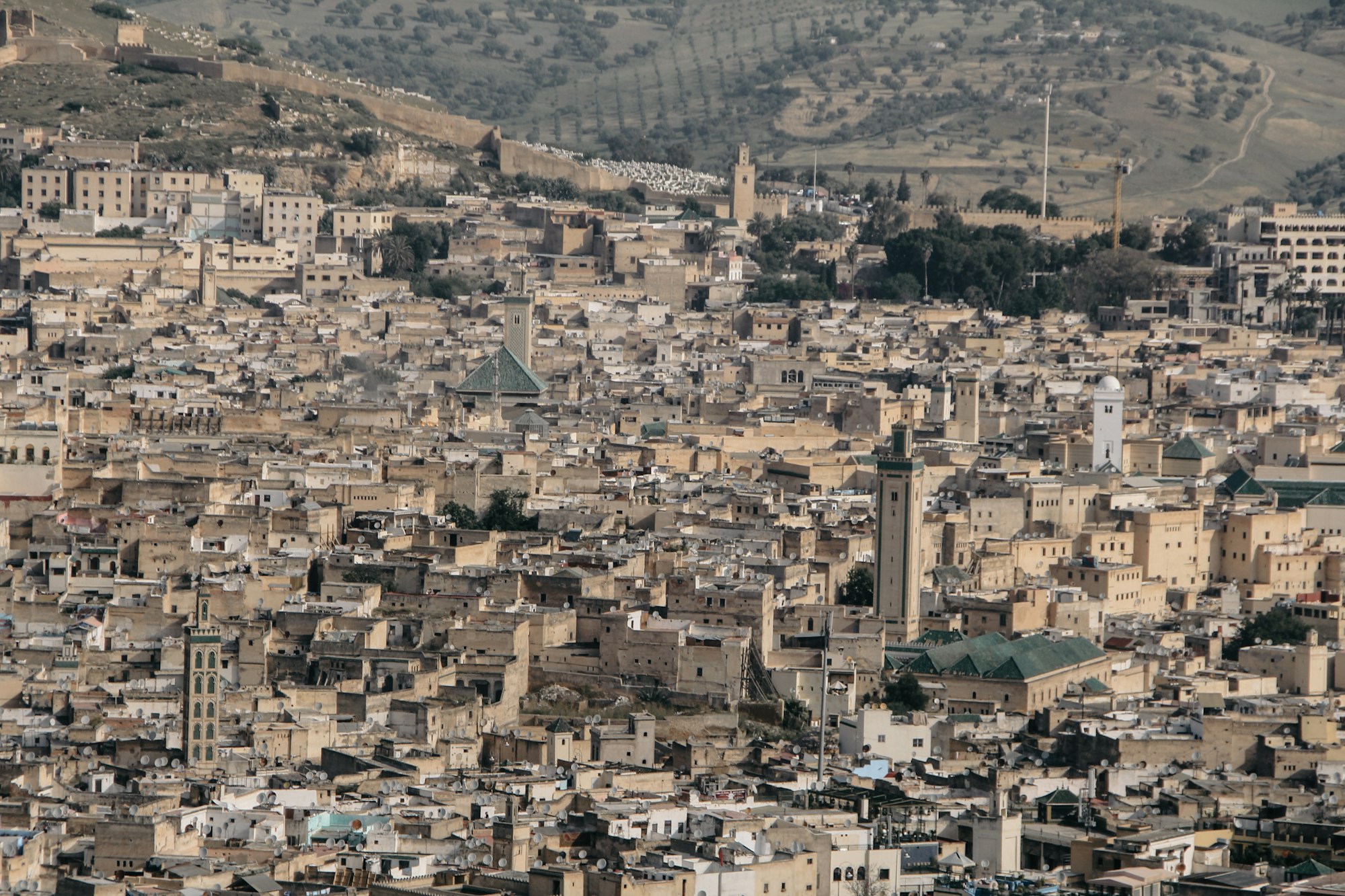
Fes el-Bali is one of the world's largest car-free medinas: 9,000 lanes, the Chouara tannery, the Bou Inania Madrasa and craftsmen working as they have for centuries. Hire a licensed guide for the first half-day; getting lost here is not a figure of speech.

Chefchaouen1–2 days
The blue town in the Rif Mountains: calm after Marrakech and Fes, perfect for wandering and photos. Walk to the Spanish Mosque for sunset, or take a day trip to the Akchour waterfalls.
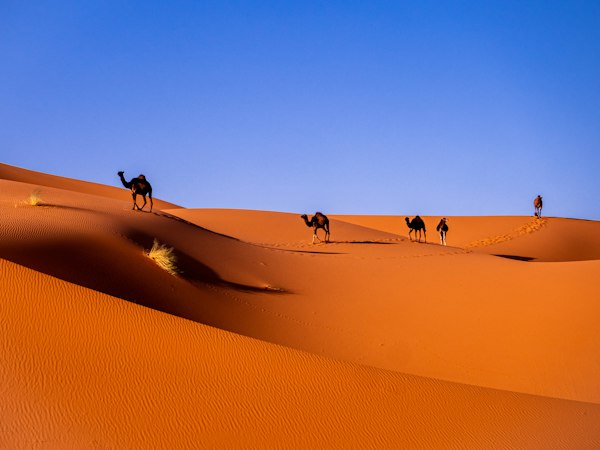
Sahara: Merzouga (Erg Chebbi)1–2 nights
Towering orange dunes, a camel ride at sunset and a night in a desert camp. Merzouga is 9–10 hours' drive from Marrakech, so most people do it as a 3-day tour (see the Sahara section below).
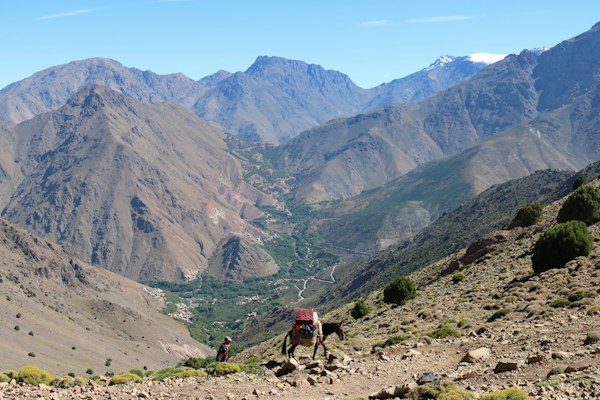
High Atlas and Imlil1–2 days
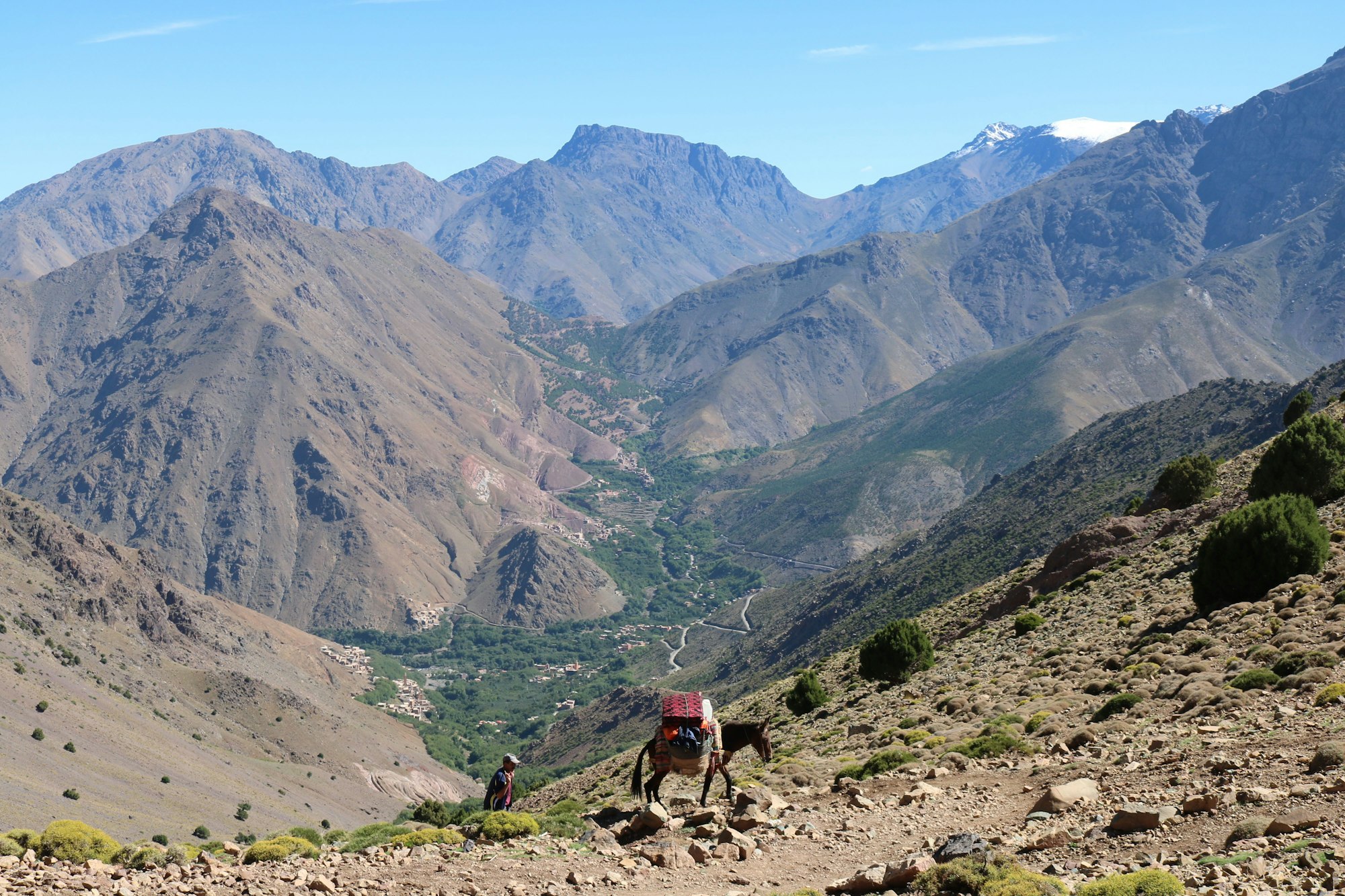
Berber villages, walnut orchards and trails about 90 minutes from Marrakech. Imlil is the base for hikes and for climbing Toubkal (4,167 m), North Africa's highest peak.
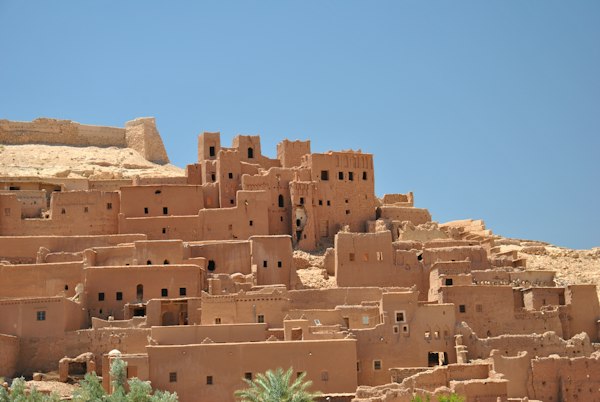
Aït BenhaddouHalf day
A UNESCO-listed mud-brick ksar and a film location for Gladiator and Game of Thrones. It's on the road to the desert, so most desert tours stop here.
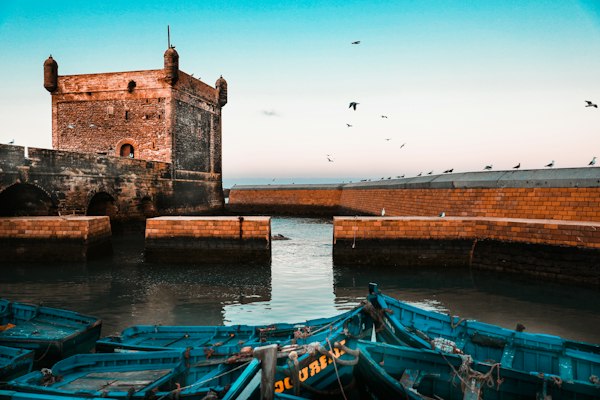
Essaouira1–2 days
A relaxed, walled Atlantic port with a UNESCO medina, fresh grilled fish and steady wind (kitesurfers love it). About 3 hours from Marrakech and the easiest escape from summer heat.
Morocco itineraries: 7, 10 and 14 days
Morocco is bigger than it looks and roads through the mountains are slow. These routes keep transfers realistic.
7 days: Marrakech, the Sahara and Fes
The classic first trip. Fly into Marrakech and out of Fes.
- Days 1–2Marrakech
Souks and Jemaa el-Fna at dusk, Bahia Palace, Ben Youssef Madrasa, Majorelle Garden.
- Day 3Over the Atlas to the Dades Valley
Tizi n'Tichka pass, Aït Benhaddou, Ouarzazate, night in the Dades or Todra gorge area.
- Day 4Merzouga
Todra Gorge, then a sunset camel ride into the Erg Chebbi dunes and a night in a desert camp.
- Day 5Desert to Fes
Sunrise on the dunes, then a long drive north through the Middle Atlas cedar forests to Fes.
- Days 6–7Fes
A guided half-day in Fes el-Bali, the tanneries, the madrasas, and a day trip to Meknes and Volubilis if you have energy.
10 days: add Chefchaouen
The 7-day route plus the blue town and an exit through Tangier.
- Days 1–7As above
Marrakech, the Sahara and Fes.
- Day 8Fes to Chefchaouen
About 4 hours by bus (CTM) or private driver.
- Day 9Chefchaouen
Wander the blue medina, sunset at the Spanish Mosque, or a hike to the Akchour waterfalls.
- Day 10To Tangier
About 2 hours by road; fly home from Tangier or take the Al Boraq high-speed train south.
14 days: the full loop
Mountains, coast, desert and the imperial cities at a comfortable pace.
- Days 1–2Marrakech
Settle in and explore the medina.
- Day 3High Atlas
Day hike from Imlil, or stay a night in a mountain guesthouse.
- Days 4–5Essaouira
About 3 hours by bus; beaches, the port and grilled fish.
- Day 6Back to Marrakech
Evening at Jemaa el-Fna.
- Days 7–9Sahara to Fes
Aït Benhaddou, the gorges and a night in Merzouga, ending in Fes.
- Days 10–11Fes, Meknes and Volubilis
The medina with a guide, then Roman ruins at Volubilis.
- Days 12–13Chefchaouen
Slow days in the Rif Mountains.
- Day 14Tangier or Fes
Fly home.
Where to stay in Morocco
In the cities, stay in a riad inside the medina: a traditional house built around a courtyard, often with a rooftop terrace. In the desert, book a camp in the dunes.
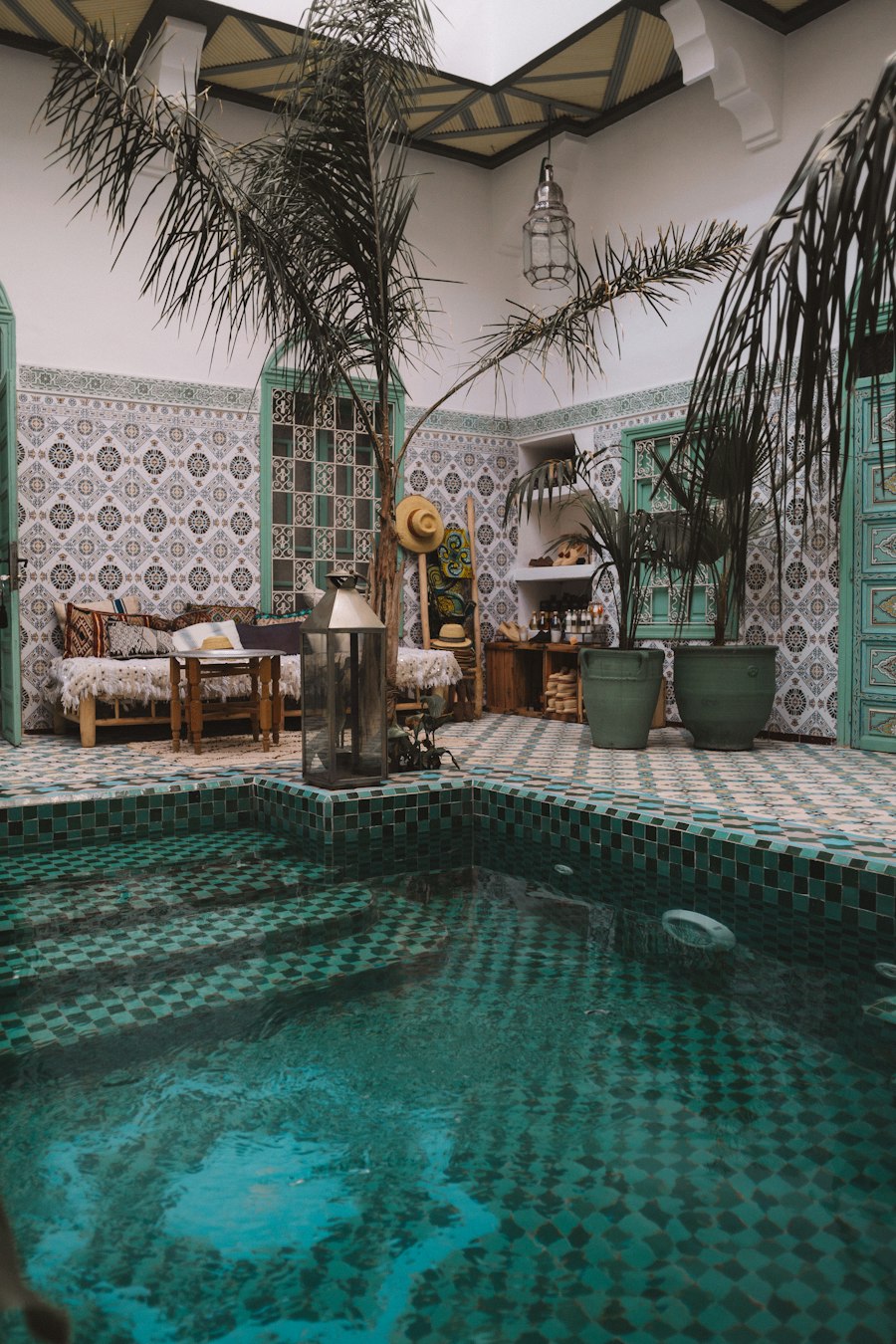
Marrakech riads
Stay inside the medina, ideally near Jemaa el-Fna or in Mouassine, so you can walk everywhere. Rooftop breakfasts are part of the experience.
See hotelsExpedia →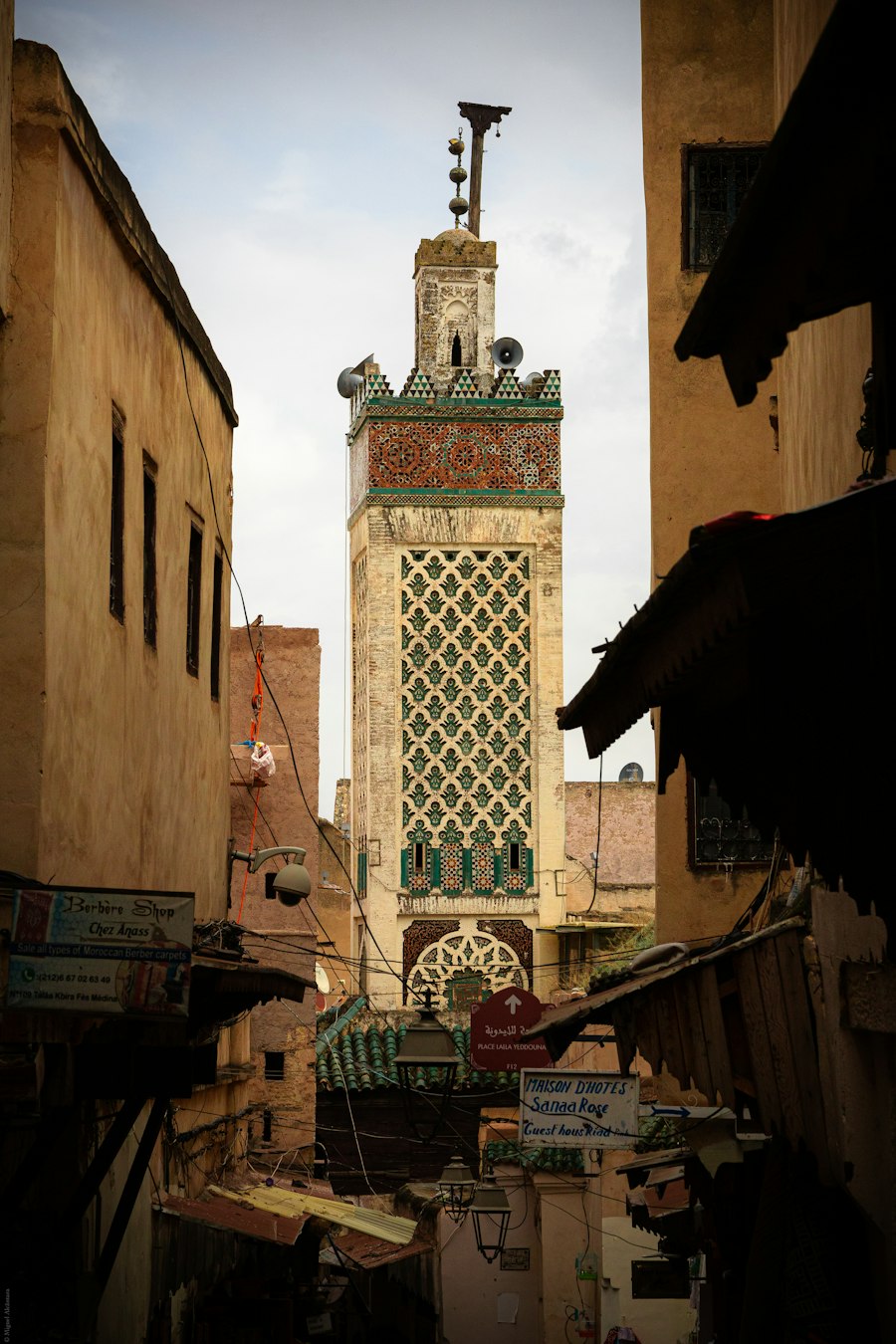
Fes medina
A riad in Fes el-Bali puts the medina on your doorstep. Choose one close to a gate (Bab Boujloud) so arriving with luggage is easy.
See hotelsExpedia →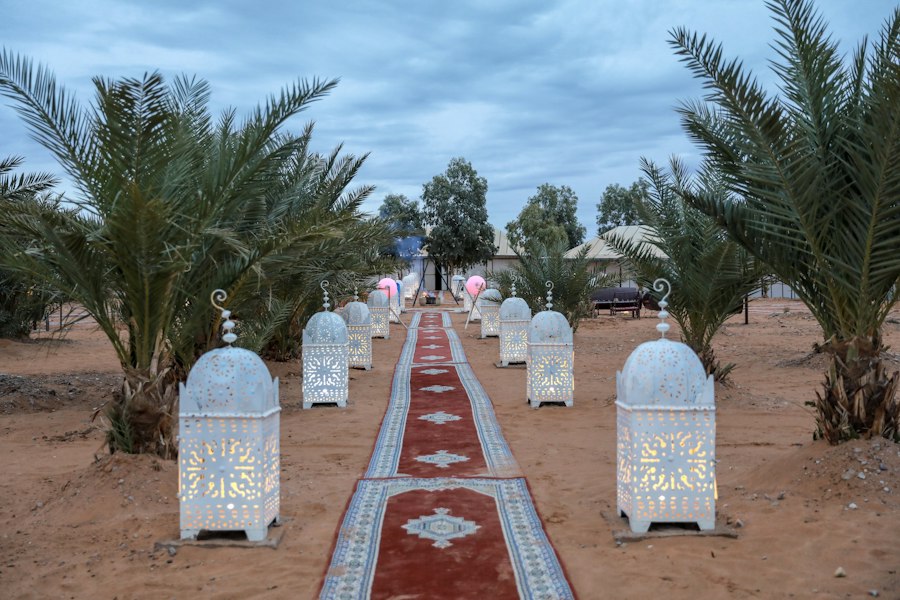
Merzouga desert camps
From simple tents to luxury camps with private bathrooms. Check whether the camel ride and dinner are included.
See hotelsExpedia →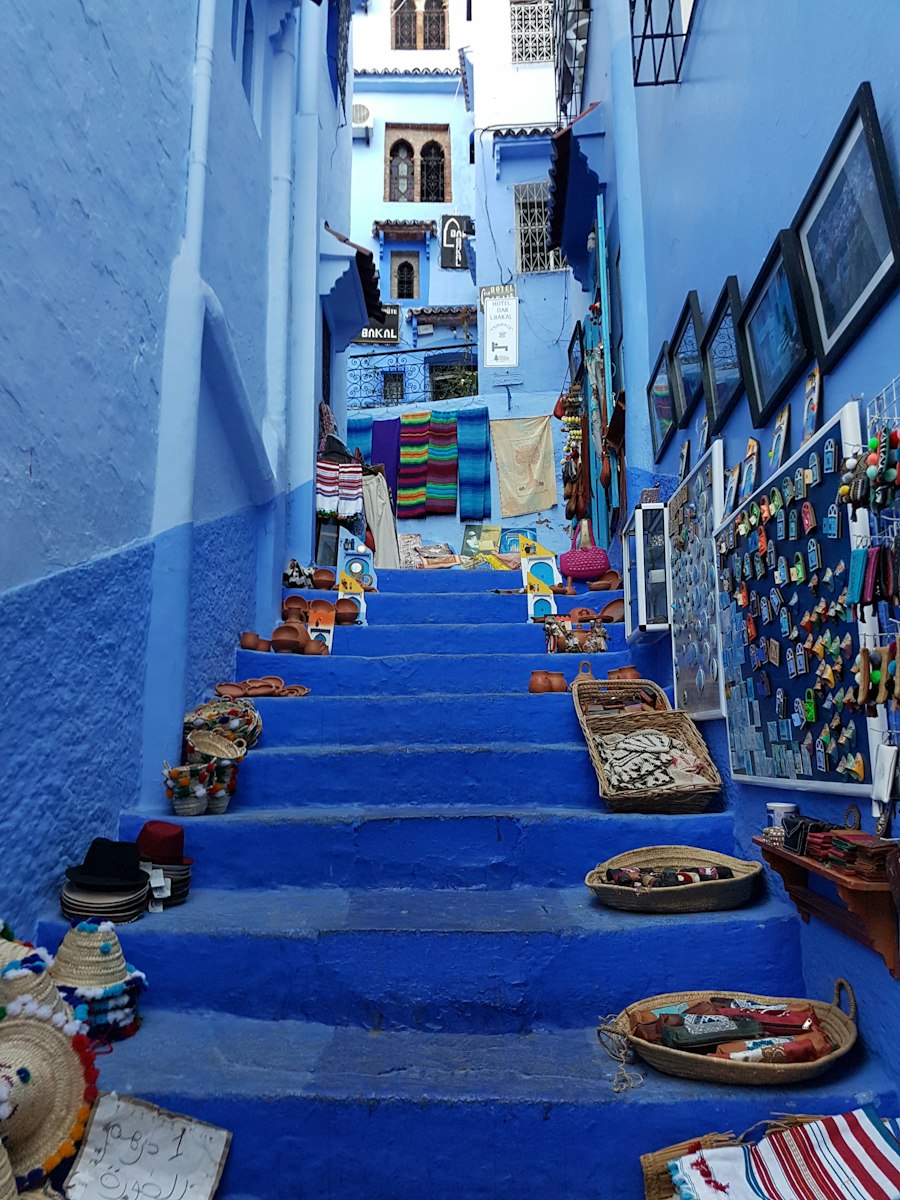
Chefchaouen
Guesthouses in the blue medina, many with rooftop views over the Rif Mountains.
See hotelsExpedia →Buying through these links supports these guides.
The Sahara trip from Marrakech: 2 or 3 days?
Merzouga's Erg Chebbi dunes are 9–10 hours' drive from Marrakech over the Atlas, which is why the classic trip is a 3-day tour: day one to the Dades Valley via Aït Benhaddou, day two to Merzouga for a sunset camel ride and a night in camp, day three back to Marrakech or on to Fes.
If you only have 2 days, go to Zagora (about 7 hours each way) instead. The dunes are much smaller, but you still get Aït Benhaddou and a night in the desert. Trying to reach Merzouga and back in 2 days means almost all of it is spent in a car.
- Shared or private: Shared group tours are by far the cheapest; private tours cost several times more but let you stop where you like.
- Check what's included: Camel ride, dinner and breakfast, the camp type (standard or luxury with private bathroom) and whether the tour ends in Marrakech or Fes.
- Pack for the night: Desert nights are cold from October to April, sometimes near freezing. A warm layer and a headlamp make a big difference.
- End in Fes: If Fes is on your route, a one-way Marrakech–Merzouga–Fes tour saves a full day of backtracking.
Money, costs and bargaining
The currency is the Moroccan dirham (MAD). It's a closed currency: you can't buy it before you travel, and you may not take more than 2,000 MAD out of the country, so change leftovers back before you leave.
ATMs are easy to find in cities and towns; withdraw larger amounts to limit fees, and tell your bank you're travelling. Hotels, riads and modern restaurants take cards, but the souks, taxis, small cafés and tips are cash only.
- Bargaining: Expected in the souks, never in shops with fixed prices. Decide what the item is worth to you, offer well below the asking price and settle somewhere in between. Stay friendly; walking away politely often brings the best price.
- Small notes: Keep 10, 20 and 50 MAD notes and coins for taxis, porters and tips; breaking a 200 MAD note can be hard.
- Tipping: About 10% in restaurants, and small tips of 10–20 MAD for porters, guides and drivers are customary.
Travelling smoothly in Morocco
Morocco is a welcoming, generally safe destination with a long tradition of hospitality. The medinas can feel intense on a first visit, so a few simple habits help, the same ones you'd use in any big, busy city.
- Offers to show you the way: People may offer to walk you through the lanes, sometimes expecting a tip. If you don't need help, a friendly "la, shukran" (no, thank you) is enough, and offline maps do the rest.
- Guides: Book a licensed guide through your riad for your first half-day; they know the medina, its history and the best workshops.
- Tannery terraces: The viewing terraces are usually part of leather shops. Enjoy the view, ask about any fee first, and remember buying is optional.
- Photos and henna: Performers on Jemaa el-Fna earn their living from photos, and henna artists charge per design; agree the price before you start.
- Taxis: Ask for the meter (compteur) in petit taxis, or agree the fare before the ride.
- Busy places: As in any crowded city, keep your phone and wallet zipped and in front of you in the souks and on the square in the evening.
Etiquette, dress and Ramadan
Morocco is a Muslim country but used to visitors. Dressing modestly, covering shoulders and knees, is respectful and attracts less attention, especially for women in the medinas and villages. A light scarf is useful everywhere.
Ramadan in 2027 is expected from about 8 February to 9 March (dates depend on the moon). Travel still works well: many restaurants for tourists stay open, but eating, drinking and smoking in public during the day is best avoided, some places close in the afternoon, and evenings after iftar are lively.
- Mosques: Most are closed to non-Muslims. The exception is the Hassan II Mosque in Casablanca, which offers guided tours.
- Photos of people: Always ask first; many people prefer not to be photographed.
- Alcohol: Available in licensed hotels, bars and some supermarkets, but not in most medina restaurants.
- Right hand: Eat and pass things with your right hand.
Riads: what to know before you book
A riad is a traditional house built around an inner courtyard, and staying in one is one of the best parts of a Moroccan trip. Medina lanes are too narrow for cars, so taxis stop at the nearest gate; ask your riad to send someone to meet you there, and let porters with handcarts take the luggage for a small tip.
Rooms facing the courtyard can be dark and echoey, so ask for one with a window if that matters to you. In winter, check that the room has heating; stone houses get cold at night.
What to eat
- Tagine: Slow-cooked stews named after the clay pot, from chicken with preserved lemon to lamb with prunes.
- Couscous: Traditionally eaten on Fridays, piled with vegetables and meat.
- Pastilla: A sweet-and-savoury pie, classically with pigeon or chicken, almonds and cinnamon.
- Harira: A tomato, lentil and chickpea soup, especially popular during Ramadan.
- Street food: Msemen flatbreads for breakfast, grilled sardines in Essaouira, the evening food stalls at Jemaa el-Fna.
- Mint tea: Sweet, poured from height, and offered everywhere as a sign of welcome.
- Stomach tips: Drink bottled water, choose busy stalls where food is cooked in front of you, and go easy on salads for the first days.
Hammam: the Moroccan bath
A visit to a hammam, a steam bath with a vigorous black-soap scrub, is a must. Neighbourhood hammams are cheap and local, with separate times or sections for men and women; bring flip-flops and a change of underwear. Spa hammams in riads and hotels are pricier but gentler and a good first experience.
Before you go
Entry and visa
Citizens of the EU, UK, US, Canada and Australia can visit visa-free for up to 90 days. Your passport should be valid for at least six months on arrival; other nationalities should check the current rules.
Flights
Direct flights from London and many European cities reach Marrakech in 3–4 hours. From North America, Royal Air Maroc flies nonstop to Casablanca.
Plugs
Morocco uses European Type C/E sockets (220 V). Travellers from the UK, Ireland or North America need an adapter.
SIM and time zone
Maroc Telecom, Orange and inwi sell SIM cards at the airports. Morocco is on UTC+1 most of the year but switches to UTC+0 during Ramadan.
Getting around Morocco
Trains
ONCF trains link Marrakech, Casablanca, Rabat, Meknes, Fes and Tangier. The Al Boraq high-speed train runs Tangier–Casablanca in about 2h10; Marrakech–Casablanca takes about 3 hours and Fes–Marrakech about 6.5–7.
Buses
CTM and Supratours buses are comfortable and cheap, and cover routes without trains, such as Fes–Chefchaouen and Marrakech–Essaouira.
Taxis
Petit taxis work inside cities (insist on the meter); shared grand taxis run fixed routes between towns and leave when full.
Driving
A rental car is great for the Atlas and the desert road, but useless inside the medinas and stressful in city traffic.
How much does a trip to Morocco cost?
Budget
€35–50 / day- Hostel or simple riad
- Street food and local cafés
- Buses and shared taxis
Mid-range
€80–130 / day- Comfortable riad
- Restaurants and a hammam
- Trains, a shared desert tour
Comfort
€200+ / day- Boutique riads and luxury camps
- Private driver and guides
- Fine dining in Marrakech
What to pack for Morocco
Universal travel adapter
Morocco uses European two-pin sockets; UK and US plugs won't fit.
View on AmazonAmazon →Desert scarf (shemagh)
Protects against sun and blowing sand in the Sahara, and doubles as a head cover for modest dress.
View on AmazonAmazon →Rechargeable headlamp
Desert camps are dark at night, and medina lanes can be poorly lit.
View on AmazonAmazon →Zipped cross-body bag
Keeps your phone, cash and passport close at hand in busy souks and on long travel days.
View on AmazonAmazon →Buying through these links supports these guides.
Book before you go
Desert tours and guided medina walks are best booked in advance, especially in spring and autumn.
Morocco eSIM
Be online from the moment you land, without queuing for a SIM at the airport.
Get an eSIMAiralo →Buying through these links supports these guides.
Quick tips
Learn three words
Salam (hello), shukran (thank you) and la, shukran (no, thank you). French is widely spoken too.
Water
Drink bottled or filtered water, not tap water.
Friday
Many shops in the medinas close around midday prayers on Friday.
Offline maps
Download maps before entering the medinas; GPS is unreliable in narrow lanes but still helps.
Carry tissues
Public toilets often have no paper.
Start early
Mornings in the souks are calmer and cooler, and the light is better for photos.
Morocco travel FAQ
Is Morocco safe for tourists?
Yes, Morocco is generally safe and very popular with travellers. The medinas can feel intense at first: agree prices in advance, book guides through your riad and keep valuables zipped away in crowded places, as you would in any big city.
How many days do you need in Morocco?
7 days covers Marrakech, the Sahara and Fes. With 10 days add Chefchaouen; with 14 you can add Essaouira and the High Atlas at a relaxed pace.
When is the best time to visit Morocco?
March to May and late September to November, when it's warm but not hot. Summer is very hot inland; winter has cold nights and snow in the Atlas.
How long is the drive from Marrakech to the Sahara?
About 9–10 hours to Merzouga, which is why most tours take 3 days. Zagora, with smaller dunes, is about 7 hours away.
Do I need a visa for Morocco?
Not if you hold an EU, UK, US, Canadian or Australian passport: stays of up to 90 days are visa-free. Your passport should be valid for at least six months.
Can I pay by card in Morocco?
In hotels, riads and modern restaurants, yes. In the souks, taxis and small cafés you'll need cash in dirhams, which you get from ATMs on arrival.
What should women wear in Morocco?
Loose clothing that covers shoulders and knees is respectful and draws less attention, especially in medinas and villages. Resorts and beaches are more relaxed.
Can you drink alcohol in Morocco?
Yes, in licensed hotels, bars and some restaurants, and it's sold in some supermarkets. Most traditional medina restaurants don't serve it.

Planning a trip to Morocco?
If you'd like help planning your route, riads and desert trip, I'm here.
Work with me