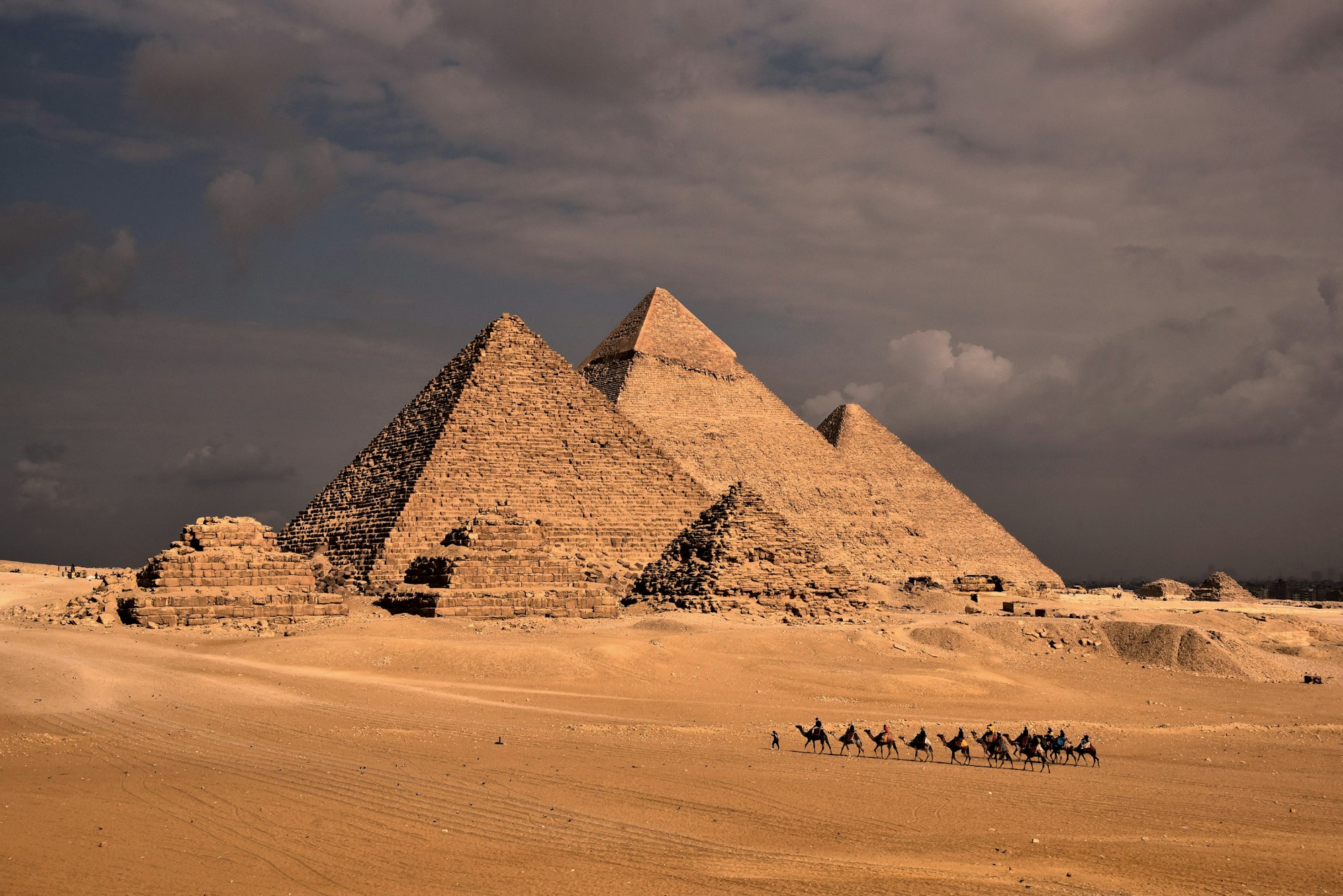
Egypt Travel Guide
Egypt is the rare trip that works as both a once-in-a-lifetime journey and a straightforward sun holiday. In one week you can stand in front of the Pyramids of Giza, see Tutankhamun's treasures in the new Grand Egyptian Museum, drift past temples on the Nile between Luxor and Aswan, and finish on a Red Sea reef with water that stays above 21°C all year. The catch is that Egypt rewards planning: distances are long, the sites are enormous, the heat shapes your day, and a few local customs (tipping, dress, prices agreed in advance) make everything smoother once you know them. This guide covers when to go month by month, three itineraries, how to choose between a Nile cruise and the train, the Red Sea resorts compared, what a trip costs, and how to travel around Egypt with ease.
Best time to visit Egypt
Winter (November to February)
The best time for Cairo, Luxor and Aswan: sunny days around 20–26°C. It is also peak season, so Nile cruises and Christmas dates sell out.
Spring (March to April)
Warm and bright, with fewer crowds after Easter. By late April the midday heat in Upper Egypt is strong.
Summer (May to September)
Too hot for comfortable sightseeing in Luxor and Aswan (often above 40°C), but prime Red Sea time with warm water.
Autumn (October)
A sweet spot: the sea is still warm and temples become pleasant again. A good month to combine both.
Egypt weather by month
Approximate average daytime highs in Luxor and sea temperature at Hurghada (°C). Cairo is about 4–6°C cooler than Luxor; Aswan a degree or two warmer. Desert nights in winter can drop below 10°C.
| Month | Luxor | Red Sea (Hurghada) | Notes |
|---|---|---|---|
| January | 23° | 22° | Peak season in the Nile Valley: warm sunny days, cool mornings and evenings. Busiest and priciest month; book cruises early. |
| February | 26° | 21° | Ideal for sightseeing. In 2027, Ramadan starts around 8 February, so expect shorter opening hours in the afternoon. |
| March | 30° | 22° | Still very pleasant in Luxor and Aswan. Ramadan runs until about 9 March 2027. Occasional sandy khamsin winds. |
| April | 35° | 23° | Getting hot in Upper Egypt by midday. Easter holidays fill Red Sea hotels. Sea still fresh for swimming. |
| May | 39° | 25° | Hot inland; plan temples for early morning. The Red Sea warms up nicely and resorts are quieter. |
| June | 41° | 27° | Very hot in Luxor and Aswan (40°C+). Better for the Red Sea, with sightseeing at dawn only. |
| July | 41° | 28° | Peak summer heat in the Nile Valley. Red Sea resorts are busy with family holidays; the sea breeze helps. |
| August | 41° | 29° | The warmest sea of the year and superb visibility for diving. Temples only very early in the day. |
| September | 39° | 28° | Sea still at its warmest. The heat inland starts to ease late in the month. |
| October | 35° | 27° | Excellent all round: warm sea, bearable temples. Autumn half-term makes it busy on the coast. |
| November | 29° | 25° | One of the best months: comfortable in Cairo and Luxor, sea still warm enough for most swimmers. |
| December | 24° | 23° | Winter sun season. Christmas and New Year are the most expensive weeks; book early. |
Where to go in Egypt

Cairo2–3 days
A megacity of more than 20 million people with a medieval heart. Beyond the museums, walk Islamic Cairo from the Citadel to Al-Muizz Street and Khan el-Khalili, and visit Coptic Cairo's churches.
Giza and Saqqara1–2 days
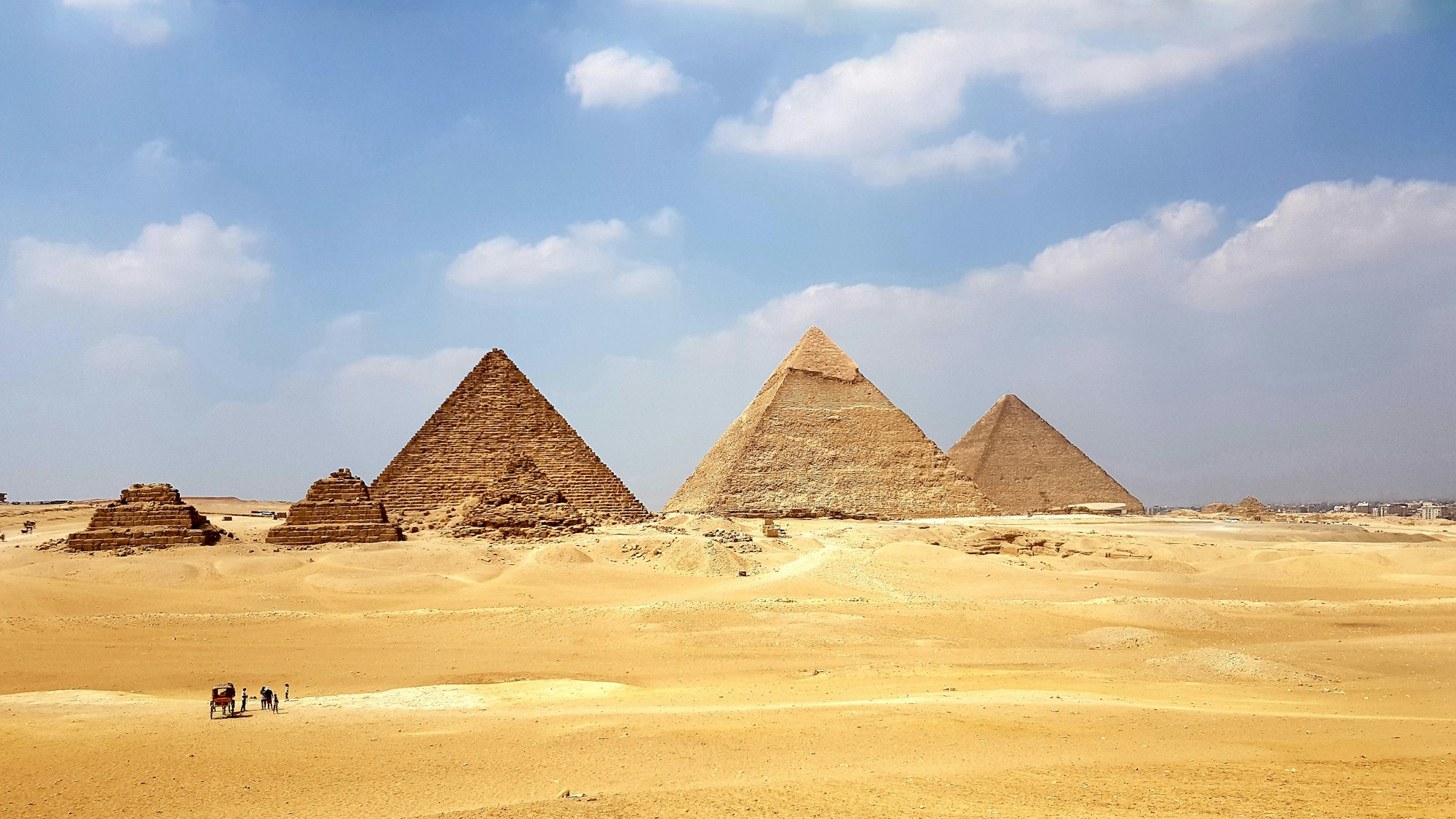
The three great pyramids and the Sphinx, with the Grand Egyptian Museum next door. Saqqara's Step Pyramid and Dahshur's Bent and Red pyramids are far quieter and worth a half day.
Luxor2–3 days
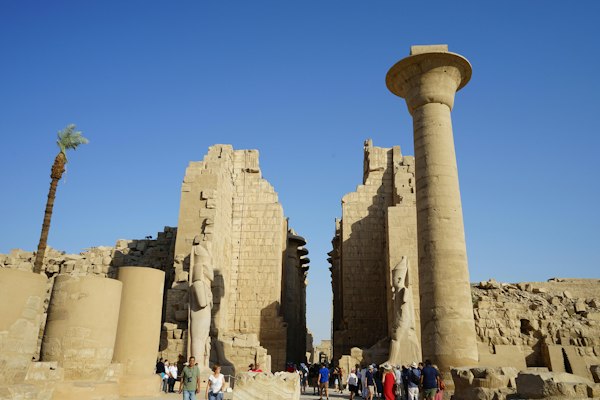
Ancient Thebes, the greatest open-air museum on earth. Karnak and Luxor Temple on the East Bank; the Valley of the Kings, Hatshepsut's temple and Medinet Habu on the West Bank.
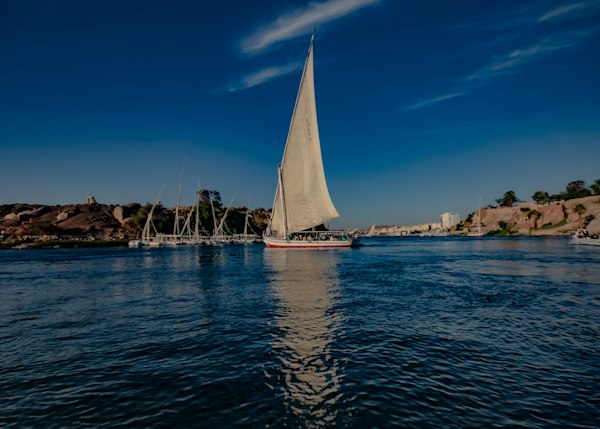
Aswan1–2 days
Egypt's most relaxed city, with granite islands, feluccas, Nubian villages and Philae Temple. The best place to simply sit by the Nile.
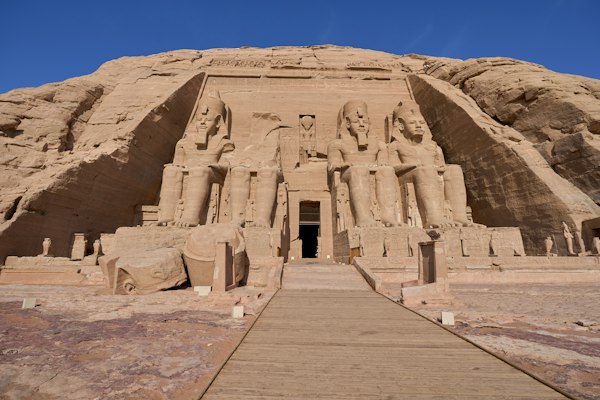
Abu SimbelDay trip
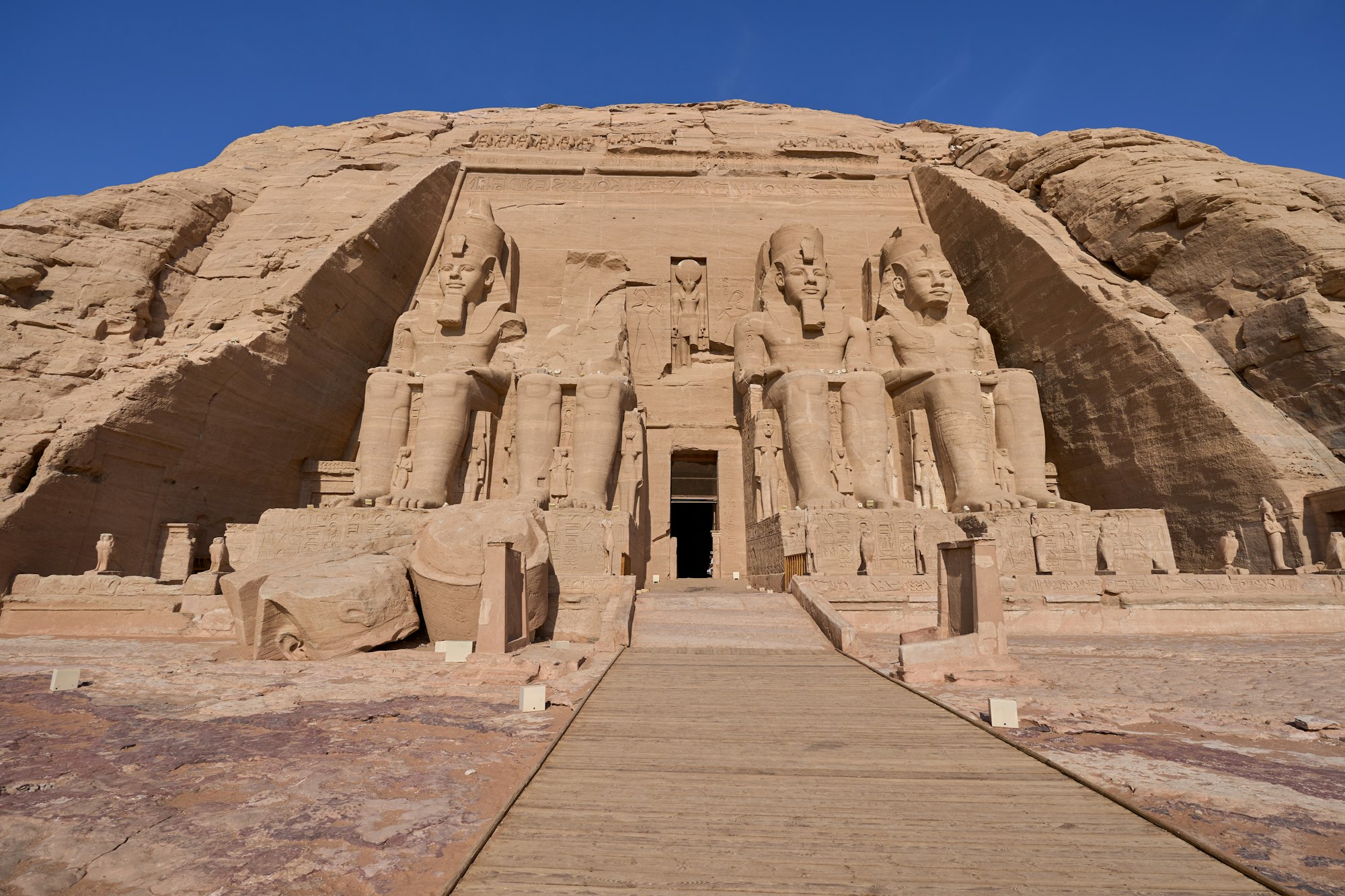
Four colossal statues of Ramesses II cut into a cliff near the Sudanese border, moved block by block in the 1960s to escape the rising Lake Nasser.
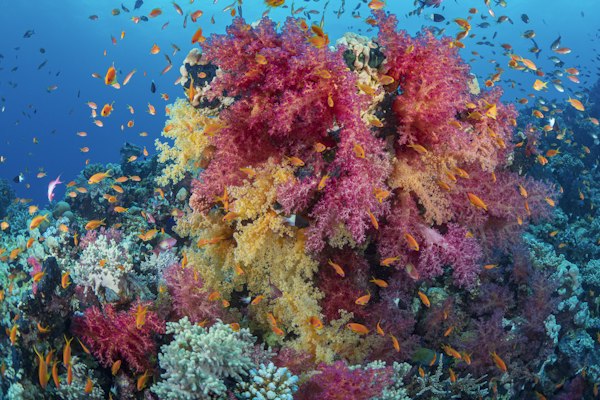
Hurghada and Marsa Alam3–7 days
Hurghada and El Gouna have the most hotels, flights and boat trips. Marsa Alam, further south, is quieter, with pristine reefs and turtles at Abu Dabbab.
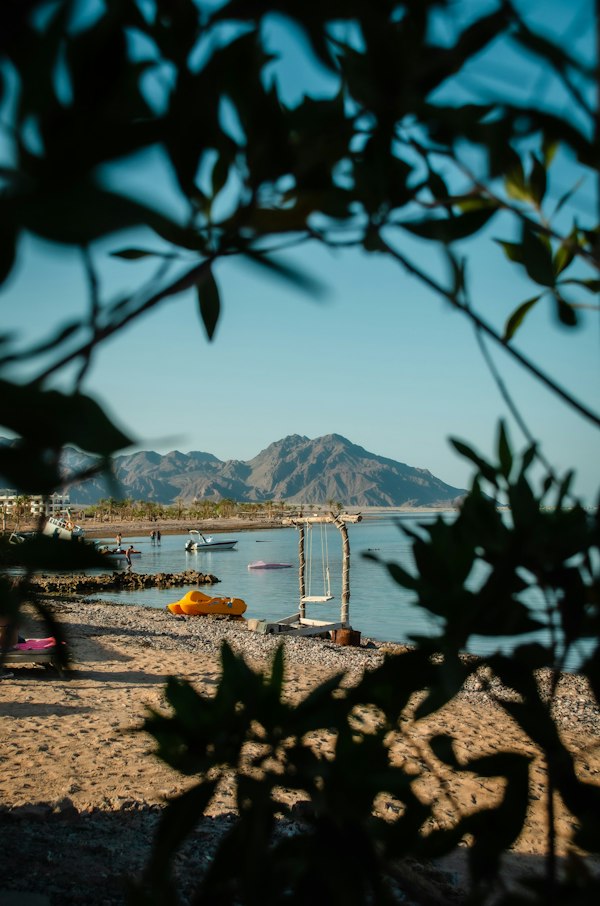
Dahab and Sinai3–5 days
A laid-back former Bedouin village on the Gulf of Aqaba, known for free diving at the Blue Hole and a night hike up Mount Sinai for sunrise.
Egypt itineraries: 7, 10 and 14 days
Domestic flights save whole days. A typical route runs north to south: Cairo, fly to Luxor or Aswan, the Nile in between, then the Red Sea to relax at the end.
7 days: the classic highlights
Cairo, Luxor and Aswan at a brisk pace, with the overnight train or two short flights.
- Day 1Arrive in Cairo
Stay near the pyramids in Giza. If you land early, watch the sunset from a rooftop with a pyramid view.
- Day 2Pyramids and the Grand Egyptian Museum
Be at the Giza plateau at opening time, then spend the afternoon at the Grand Egyptian Museum, a few minutes away.
- Day 3Islamic Cairo, then south
The Citadel, the Sultan Hassan Mosque and Khan el-Khalili bazaar. Evening flight or sleeper train to Luxor.
- Day 4Luxor West Bank
Sunrise balloon ride, then the Valley of the Kings, Hatshepsut's temple and the Colossi of Memnon.
- Day 5Karnak and Luxor Temple
Karnak in the morning, Luxor Temple lit up after dark. Train to Aswan the next morning (about 3 hours).
- Day 6Aswan
Philae Temple by boat, a felucca at sunset around Elephantine Island, dinner in a Nubian village.
- Day 7Abu Simbel and home
Early departure to Abu Simbel (by road or a 45-minute flight), then fly back via Cairo.
10 days: Nile cruise and Red Sea
The most popular combination: culture first, beach second.
- Days 1–3Cairo and Giza
As in the 7-day route, with an extra half day for the Egyptian Museum on Tahrir Square or Saqqara and its Step Pyramid.
- Days 4–7Nile cruise Luxor to Aswan
Fly to Luxor and board a 4-night cruise: Luxor's temples and tombs, Edfu, Kom Ombo and Aswan.
- Day 8Abu Simbel
Day trip from Aswan, then fly or drive to the coast.
- Days 9–10Red Sea
Snorkel from the house reef or take a boat to the Giftun Islands off Hurghada, then fly home from Hurghada.
14 days: the full picture
Time to slow down, add the desert and dive properly.
- Days 1–4Cairo, Giza, Saqqara and Alexandria
The pyramids and museums, plus a day trip to Alexandria on the Mediterranean (about 2.5 hours by train).
- Days 5–6Luxor
Two full days for both banks, including less-visited tombs such as the Valley of the Nobles and Medinet Habu.
- Days 7–9Dahabiya or cruise to Aswan
A small sailing dahabiya takes 4–5 nights and stops at quiet riverbanks; a cruise ship takes 3–4.
- Day 10Aswan and Abu Simbel
Stay a night at Abu Simbel to see the temples without the morning crowds, if time allows.
- Days 11–14Marsa Alam or Dahab
Marsa Alam for turtles and quiet reefs on the mainland; Dahab in Sinai for a relaxed, independent beach town and the Blue Hole.
Where to stay in Egypt
Base yourself near the sights, not in the city centre: Giza for the pyramids, the West Bank or the Corniche in Luxor, and a hotel with a good house reef on the Red Sea.
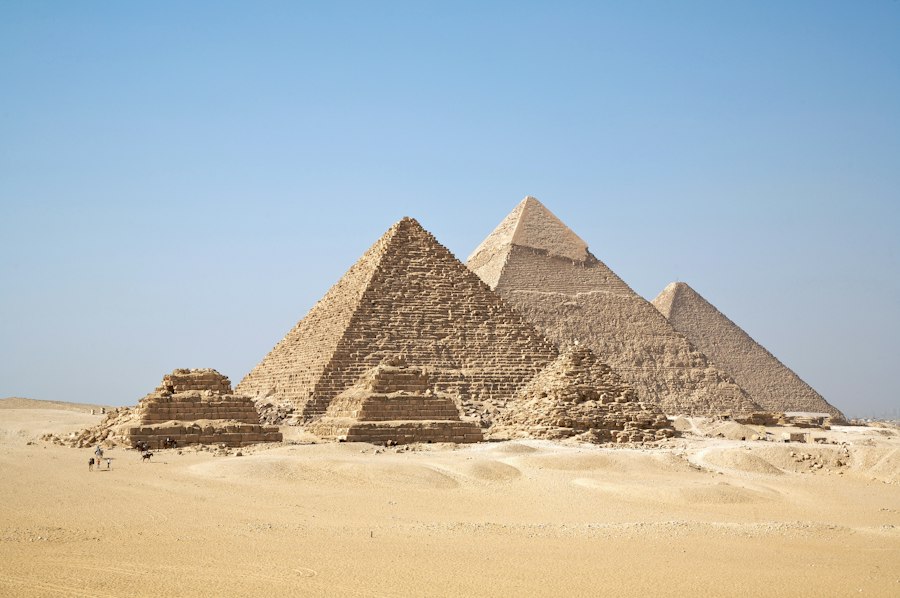
Giza, with a pyramid view
Guesthouses and hotels around the plateau put the pyramids outside your window and the Grand Egyptian Museum minutes away. Central Cairo (Zamalek, Downtown) suits a second night for Islamic Cairo.
See hotelsExpedia →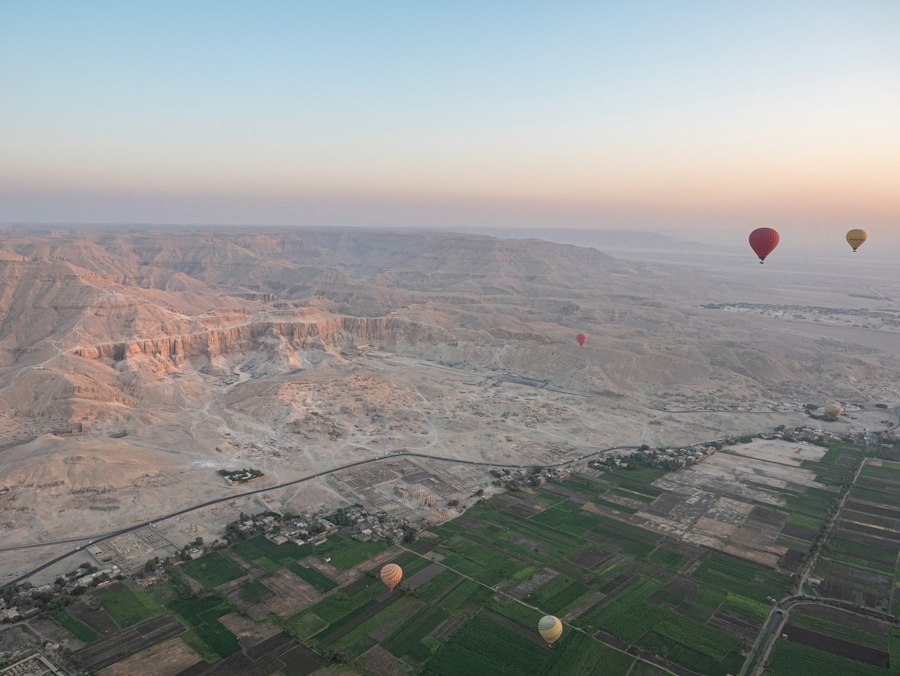
Luxor
The East Bank Corniche is lively and close to Karnak; the West Bank is quieter, rural and closer to the tombs and the balloon launch site.
See hotelsExpedia →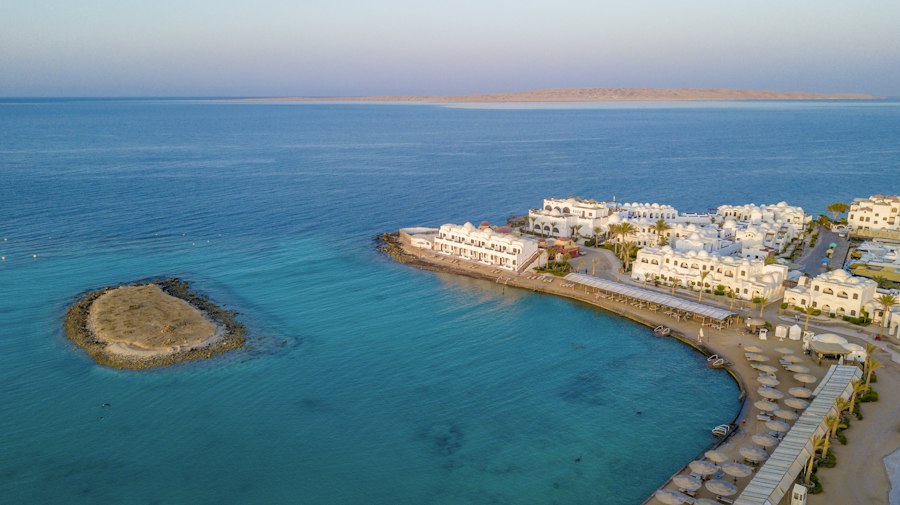
Hurghada and El Gouna
The easiest Red Sea base, with direct flights from the UK and Europe. Look for a hotel with its own house reef or a jetty so you can snorkel straight from the beach.
See hotelsExpedia →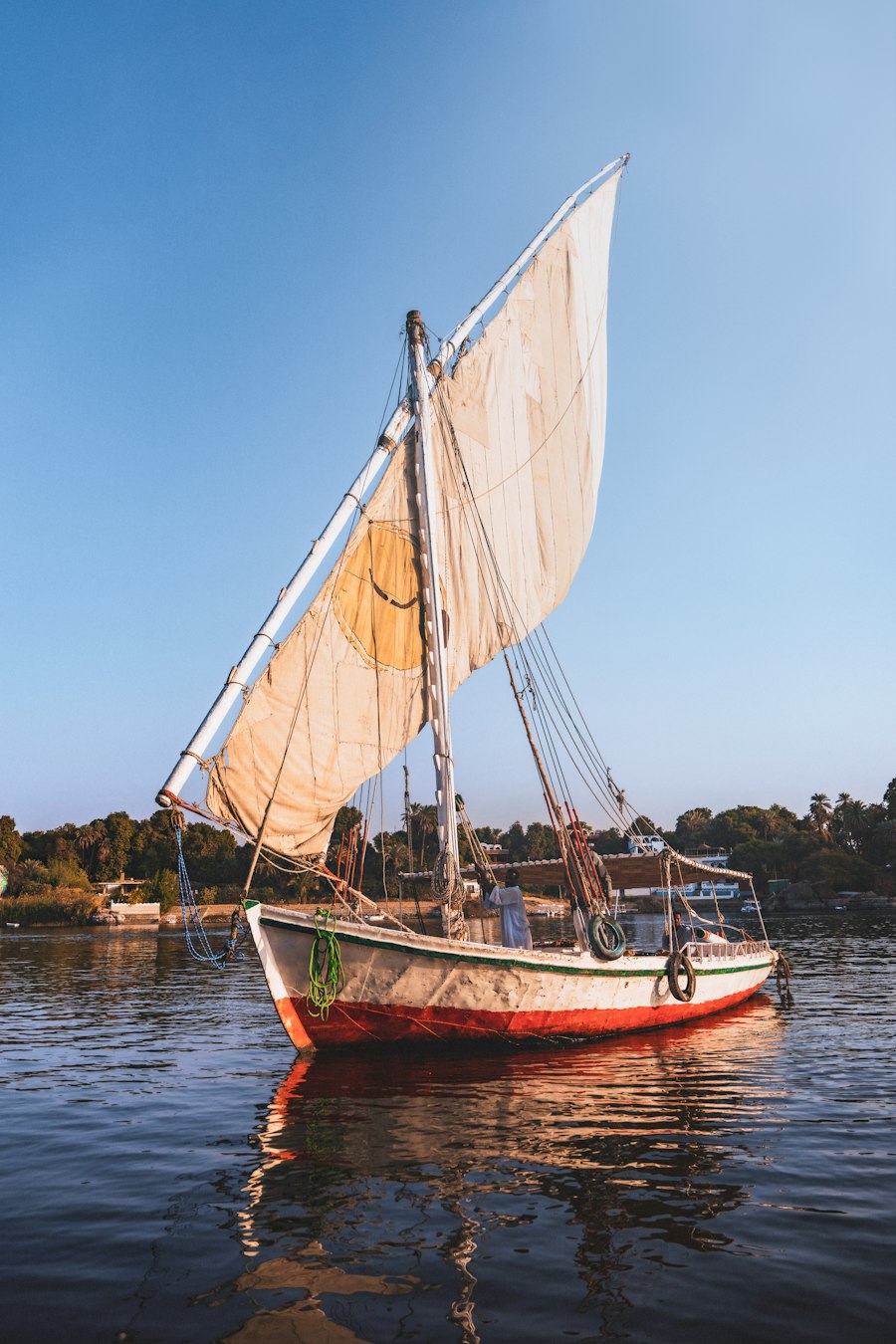
Aswan
Stay on the Corniche or on an island. Nubian guesthouses on the West Bank are colourful and peaceful.
See hotelsExpedia →Buying through these links supports these guides.
Nile cruise, dahabiya or train?
The stretch of the Nile between Luxor and Aswan is about 200 km and holds most of Egypt's great temples. There are three good ways to cover it, and each suits a different traveller.
Most cruises run Luxor to Aswan in 4 nights or Aswan to Luxor in 3, with guided visits to Edfu and Kom Ombo on the way. Pay attention to how many nights include sightseeing: on a short cruise you spend a lot of time moored.
- Cruise ship: The easy option: meals, guide and entry arrangements included, 60–80 cabins, a sun deck and a pool. Great value in shoulder season; choose a newer or renovated ship with good reviews.
- Dahabiya: A traditional sailing boat with 6–12 cabins. It stops at small villages and sandbanks the big ships can't reach. More expensive, but the most beautiful way to see the Nile.
- Train and hotels: The cheapest and most flexible: Luxor–Aswan takes about 3 hours by day train, and you can add Edfu and Kom Ombo by car. You see the temples at your own pace.
- Lake Nasser cruise: A handful of ships sail between Aswan and Abu Simbel over 3–4 nights, visiting Nubian temples most visitors never see.
The Red Sea: which resort?
Egypt's Red Sea coral reefs are among the most accessible in the world: warm water, excellent visibility and reefs a few metres from the beach. Choose your base by what you want from the sea.
- Hurghada, El Gouna and Makadi Bay: The most hotels and flights, all-inclusive resorts and day trips to the Giftun Islands. El Gouna is a lagoon town built around canals, with a marina, kitesurfing and good restaurants.
- Marsa Alam: Further south and less developed. Reefs are in better condition, green turtles graze in the bay at Abu Dabbab, and dolphins are often seen at Sataya reef.
- Sharm el-Sheikh: Big resorts and Ras Mohammed National Park, one of the Red Sea's most famous dive areas, plus the Thistlegorm wreck.
- Dahab: Independent and relaxed, with shore diving along the coast and a café scene. Ideal for longer stays.
- Diving and snorkelling: Beginner dive courses are widely available in all resorts. Water shoes help at shore entries over coral; don't stand on the reef, and use reef-friendly sunscreen.
Pyramids and museums: how to plan Giza
The Grand Egyptian Museum (GEM) near the pyramids has been fully open since November 2025. It is the world's largest museum devoted to a single civilisation and shows Tutankhamun's complete tomb treasure together for the first time. Allow at least half a day, and buy timed tickets online.
At the pyramids, arrive at opening time to beat the heat and the tour buses. The plateau is large, so use the site's shuttle buses or agree a price for a car or a camel before you set off. Entry to the inside of the Great Pyramid is a separate ticket, and the passages are cramped and steep.
The older Egyptian Museum on Tahrir Square is still open and still full of treasures, while the royal mummies are now at the National Museum of Egyptian Civilization in Fustat.
Travelling smoothly in Egypt
Egyptians are famously hospitable, and most visitors come home talking about the warmth of the people as much as the monuments. A few local habits make the experience easier from the first day.
- Agree prices first: For taxis without a meter, camel and horse rides, felucca trips and souvenirs, settle the price, the currency and what's included before you start.
- Use apps in cities: Uber and Careem work well in Cairo and Alexandria, with a fixed price shown up front.
- Book guides through your hotel: A licensed Egyptologist guide transforms Luxor and Giza. Arrange one through your accommodation, cruise or a well-reviewed tour company.
- Friendly offers: Someone offering to show you the way or a hidden relief inside a temple is usually hoping for a small tip. A polite 'la, shukran' (no, thank you) is enough if you don't want the help.
- Busy places: As in any big city, keep your phone and wallet zipped and in front of you in crowded markets and at the pyramids.
- Police and checkpoints: You will see tourist police and road checkpoints, especially on the road to Abu Simbel. Carry your passport or a copy on day trips.
Money and tipping (baksheesh)
The currency is the Egyptian pound (EGP). ATMs are everywhere in cities and resorts, and cards work in hotels, larger restaurants and shops. Keep plenty of small notes (10, 20 and 50 EGP) for tips, toilets and taxis.
Tipping, or baksheesh, is part of everyday life in Egypt and part of many people's income. It's best seen as a small thank-you for a service, not an obligation for nothing.
- Restaurants: A service charge of around 12% is often on the bill but doesn't go to the waiter; leave about 10% extra in cash.
- Guides and drivers: Around €5–10 per person per day for a guide, somewhat less for a driver, depending on the service.
- Nile cruises: The crew usually shares a tip box at the end; ships suggest an amount per person per night.
- Small services: Toilet attendants, porters and temple guardians: 10–20 EGP.
Dress, etiquette and Ramadan
Egypt is a conservative Muslim-majority country with a large Coptic Christian community. Swimwear is normal in resorts, but in cities and at sites, shoulders and knees covered is respectful and helps you blend in. Loose, light cotton or linen is also the most comfortable in the heat.
In 2027, Ramadan falls around 8 February to 9 March, in the middle of peak season. Sites stay open, often with shorter hours, and tourist restaurants serve food during the day. Avoid eating and drinking conspicuously in public in the daytime, and enjoy the lively streets after sunset.
- Mosques: Take off your shoes, and women cover their hair. Some mosques lend robes at the entrance.
- Photos: Ask before photographing people. Drones need a permit and are confiscated at the airport without one; don't photograph police or military sites.
- A few words: Salam aleikum (hello), shukran (thank you) and yalla (let's go) go a long way.
What to eat in Egypt
- Koshari: The national dish: rice, lentils, pasta and chickpeas with tomato sauce and crispy onions. Cheap, filling and vegetarian.
- Ful and ta'ameya: Stewed fava beans and Egyptian falafel, made from fava beans rather than chickpeas. The classic breakfast.
- Molokhia: A green, garlicky soup of jute leaves served with rice or bread and chicken or rabbit.
- Grilled fish on the coast: Choose your fish by weight in local restaurants in Hurghada or Alexandria.
- Sweets and drinks: Om ali (bread pudding), fresh mango and sugarcane juice, and karkadeh, hibiscus tea served hot or iced.
- Stomach tips: Drink bottled water, pick busy food stalls and go easy on salads for the first few days.
Before you go
Visa
UK, US, EU, Canadian and Australian passport holders can get a 30-day tourist visa on arrival (about US$30, paid in cash at the bank counters before passport control) or buy an e-visa in advance on the official portal visa2egypt.gov.eg (about US$25). Your passport needs six months' validity. Rules and fees change, so check before you travel.
Sinai-only stamp
If you fly straight to Sharm el-Sheikh and stay in Sharm, Dahab, Nuweiba or Taba for up to 15 days, a free Sinai-only entry stamp may be enough. It doesn't cover Cairo, Luxor or the Hurghada coast.
Flights
From the UK, easyJet, Jet2, TUI and British Airways fly to Hurghada, Sharm el-Sheikh, Marsa Alam, Luxor or Cairo in about 5 hours. From North America, EgyptAir flies nonstop from New York to Cairo; otherwise connect via Europe or the Gulf.
Plugs and power
Egypt uses European two-pin Type C and F sockets at 220 V. UK and US travellers need an adapter.
Time
Egypt is on UTC+2, and UTC+3 during summer time (late April to late October).
Phone and data
Vodafone, Orange, e& and WE sell SIM cards in the arrivals hall; an eSIM is quicker. Your own phone is fine for a normal holiday stay.
Getting around Egypt
Domestic flights
EgyptAir and Nile Air link Cairo with Luxor (about 1 hour), Aswan, Hurghada, Sharm el-Sheikh and Abu Simbel. The fastest way to cover the long distances.
Sleeper train
Overnight trains run Cairo–Luxor (about 9–10 hours) and Cairo–Aswan (about 12–13 hours) in two-berth cabins with dinner and breakfast. Book online in advance; foreigners pay a fare in US dollars.
Day trains
Air-conditioned day trains connect Cairo with Alexandria and Luxor with Aswan cheaply.
Ride-hailing and taxis
Uber and Careem in Cairo and Alexandria; elsewhere, agree the fare before getting in.
Private driver
For Abu Simbel, Edfu and Kom Ombo, or Luxor to the Red Sea (about 4 hours), a private car with driver booked through your hotel is comfortable and good value. Self-driving is not recommended.
How much does a trip to Egypt cost?
Budget
€40–60 / day- Guesthouses and simple hotels
- Koshari, falafel and local cafés
- Trains, shared tours, site tickets
Mid-range
€100–180 / day- 4-star hotels or a standard Nile cruise
- Private guide in Luxor and Giza
- Domestic flights, balloon ride
Comfort
€300+ / day- Historic hotels such as the Old Cataract or Mena House
- Dahabiya or luxury cruise
- Private driver and Egyptologist throughout
What to pack for Egypt
Universal travel adapter
Egypt uses European two-pin sockets; UK and US plugs won't fit.
View on AmazonAmazon →SPF 50+ sunscreen
The sun in Luxor and on a Red Sea boat is fierce even in winter, and there's little shade at the temples.
View on AmazonAmazon →Desert scarf (shemagh)
Shade for your neck at the pyramids, protection from blowing sand, and a quick cover for shoulders or hair in mosques.
View on AmazonAmazon →Rechargeable headlamp
For the pre-dawn start to Abu Simbel or the balloon, and the night hike up Mount Sinai.
View on AmazonAmazon →Zipped cross-body bag
Keeps passport, cash for tips and your phone close at hand on long sightseeing days.
View on AmazonAmazon →Buying through these links supports these guides.
Book before you go
Pyramid and Grand Egyptian Museum tours with an Egyptologist, Luxor balloon flights and Abu Simbel trips fill up in winter. Booking ahead secures a good guide and a fixed price.
Egypt eSIM
Online from the moment you land, for maps, ride-hailing apps and messaging, without queuing at the airport.
Get an eSIMAiralo →Buying through these links supports these guides.
Quick tips
Start at dawn
Temples open early. Seeing the Valley of the Kings at 6 am means cooler air and fewer people.
Carry small notes
Change a big note at your hotel whenever you can; small change is always in demand.
Friday
The weekly day off. Sites are open, but some shops and offices close around midday prayers.
Drink more than you think
Dry heat hides dehydration. Carry at least a litre of water at the sites.
Luxor Pass
If you plan to see many sites in Luxor over several days, the Luxor Pass can save money; bring a passport photo.
Offline maps
Download Cairo and Luxor in your map app before you go.
Egypt travel FAQ
Is Egypt safe to visit?
Millions of tourists visit Egypt every year, and the main tourist areas (Cairo, Giza, Luxor, Aswan and the Red Sea resorts) are well policed. Check your government's travel advice before booking, as it lists a few border regions to avoid.
Do I need a visa for Egypt?
Most Western visitors need a visa, which you can buy on arrival (about US$30) or online as an e-visa (about US$25). Check the official e-visa portal for your passport before travelling.
How many days do you need in Egypt?
Seven days covers Cairo, Luxor and Aswan at a brisk pace. Ten days lets you add a Nile cruise and a few beach days; two weeks is ideal.
When is the best time to visit Egypt?
October to April for sightseeing. For the Red Sea, May to November, when the sea is 25–29°C.
Is the Grand Egyptian Museum open?
Yes. The GEM near the pyramids opened fully in November 2025, with Tutankhamun's complete collection on display. Book timed tickets online.
Nile cruise or train?
A cruise is easiest and includes guided visits along the way; the train and hotels are cheaper and more flexible. A dahabiya is the most beautiful but most expensive option.
What should I wear in Egypt?
Light, loose clothes that cover shoulders and knees in cities and at sites. Swimwear is fine at the resorts. Bring a scarf for mosques and the sun.
Can I drink the tap water in Egypt?
It's best not to. Drink bottled or filtered water, which is cheap and sold everywhere.

Planning a trip to Egypt?
If you'd like help with your route, the Nile or the Red Sea, get in touch.
Contact